Reaktionsgleichung

C[C:2]1[CH:3]=[C:4]([C:9]([C:12]2[CH:17]=[CH:16][C:15]([OH:18])=[C:14](C)[CH:13]=2)(C)C)[CH:5]=[CH:6][C:7]=1[OH:8].[CH2:20]([Cl:22])[Cl:21].C(Cl)(Cl)=O>[OH-].[K+]>[CH:5]1[C:4]([C:9]([C:12]2[CH:17]=[CH:16][C:15]([OH:18])=[CH:14][CH:13]=2)=[C:20]([Cl:22])[Cl:21])=[CH:3][CH:2]=[C:7]([OH:8])[CH:6]=1Komponenten
5
Edukt 3


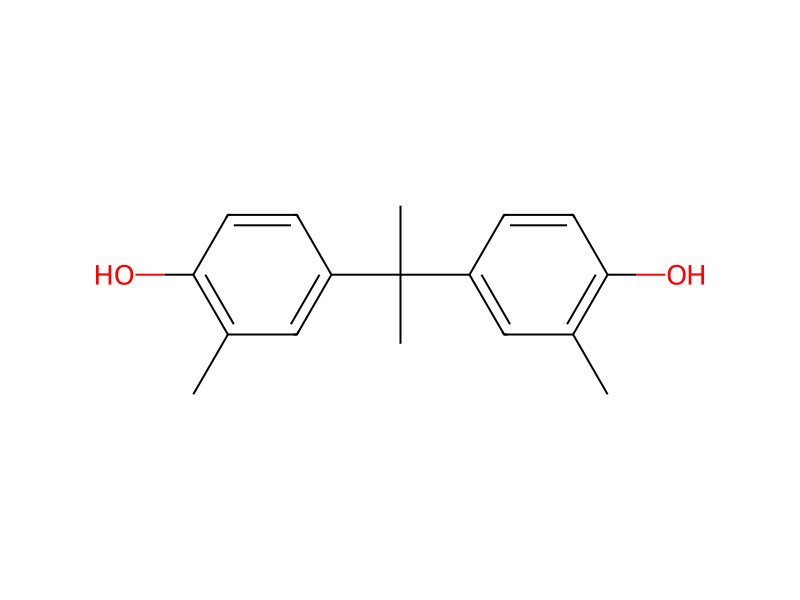
Produkt 1

Reagenzien, Katalysatoren, Lösungsmittel 1

Versuchsvorschrift
A solution prepared by dissolving 0.2 kg of 2.2-bis(3-methyl-4-hydroxyphenyl) propane in 1.2 kg of aqueous potassium hydroxide having a concentration of 16 mass % was mixed with 1.0 kg of methylene chloride. Then, while the solution was being stirred, phosgene gas was blown into the solution while cooling at 1 L/min until pH becomes 9 or less. Subsequently, the reaction solution was separated in a stand still manner, and a methylene chloride solution of an oligomer which has 2 to 6 polymerization degree and a chloroformate group at its molecular terminal was obtained as an organic layer (a solid content concentration of 0.30 kg/L). This oligomer is referred to as “PCO-C” hereinafter.
Aufarbeitung
- customA solution prepared
- temperaturewhile cooling at 1 L/min until pH
- customSubsequently, the reaction solution was separated in a stand still manner
- customto 6 polymerization degree
- customa chloroformate group at its molecular terminal was obtained as an organic layer (a solid content concentration of 0.30 kg/L)
Quellen und Nachweise
- ORD-Eintrag
- ord-c0b488faa52d40919f850f1d2300be08
- Quelldatensatz
- uspto-grants-2012_06
- Patentnummer
- US08207288B2
Verknüpfte Notizen
Wird geladen…