StartseiteMCPWorkbenchSkills
StartseiteWorkbenchBenachrichtigungenMein Bereich
llms.txt · MCP-AnleitungDatenschutz · Nutzungsbedingungen · Supportv1.8.3
  1. Startseite
  2. /Reaktion

Potassium Hydroxide → 4-(3,4-Dimethoxy-2-methoxymethoxyphenyl)-5-nitroisoquinoline

HRID 2227364
Drucken

Reaktionsgleichung

Reaktionsgleichung von HRID 2227364
Br[C:2]1[C:11]2[C:6](=[CH:7][CH:8]=[CH:9][C:10]=2[N+:12]([O-:14])=[O:13])[CH:5]=[N:4][CH:3]=1.[CH3:15][O:16][C:17]1[C:18]([O:34][CH2:35][O:36][CH3:37])=[C:19](B2OC(C)(C)C(C)(C)O2)[CH:20]=[CH:21][C:22]=1[O:23][CH3:24].[OH-].[K+]>C(COC)OC.[Br-].C([N+](CCCC)(CCCC)CCCC)CCC.O.C1C=CC([P]([Pd]([P](C2C=CC=CC=2)(C2C=CC=CC=2)C2C=CC=CC=2)([P](C2C=CC=CC=2)(C2C=CC=CC=2)C2C=CC=CC=2)[P](C2C=CC=CC=2)(C2C=CC=CC=2)C2C=CC=CC=2)(C2C=CC=CC=2)C2C=CC=CC=2)=CC=1>[CH3:15][O:16][C:17]1[C:18]([O:34][CH2:35][O:36][CH3:37])=[C:19]([C:2]2[C:11]3[C:6](=[CH:7][CH:8]=[CH:9][C:10]=3[N+:12]([O-:14])=[O:13])[CH:5]=[N:4][CH:3]=2)[CH:20]=[CH:21][C:22]=1[O:23][CH3:24]
KomponentenVersuchsvorschriftAufarbeitungQuellen und NachweiseNotizen zur Reaktion

Komponenten

8

Edukt 3

HCID 14797Potassium HydroxideHCID 2712804-Bromo-5-nitroisoquinolineHCID 223807722-(3,4-Dimethoxy-2-methoxymethoxyphenyl)-4,4,5,5-tetramethyl[1,3,2]dioxaborolane

Produkt 1

HCID 129719194-(3,4-Dimethoxy-2-methoxymethoxyphenyl)-5-nitroisoquinolineAusbeute 99,9 %

Reagenzien, Katalysatoren, Lösungsmittel 4
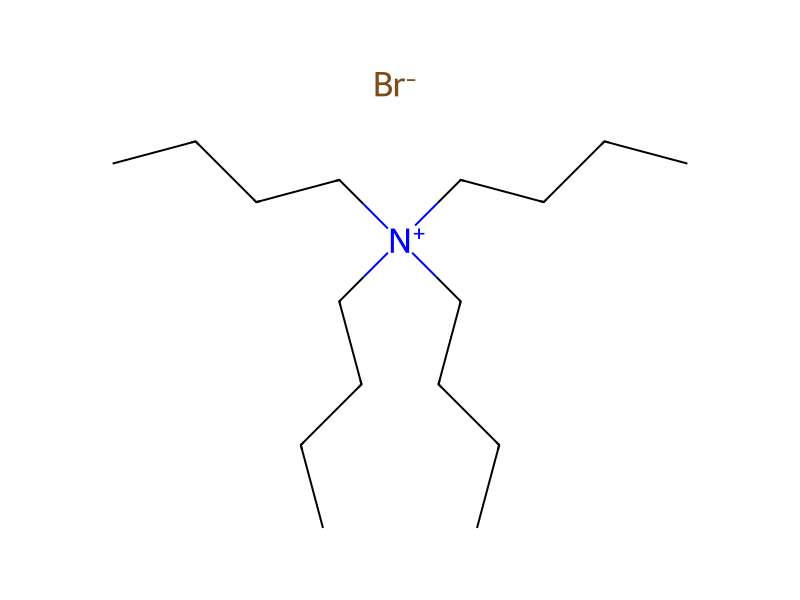
HCID 74236
Tetrabutylammonium Bromide
Katalysator
HCID 178418397HCID 178418397, VerbindungKatalysator
HCID 962WaterLösungsmittel
HCID 80711,2-DimethoxyethaneLösungsmittel2×

Versuchsvorschrift

Isoquinoline 3 (3.36 g; 0.0143 mol), pinacol boronate ester 2 (5.562 g; 0.0172 mol), and 1.0 g (6 mol %) of tetrakis(triphenylphosphine)palladium(0) were suspended in 100 ml of dimethoxyethane (DME). Potassium hydroxide (3.6 g; 0.064 mol), and 0.46 g (10 mol %) of tetrabutylammonium bromide were dissolved in 14.5 ml of water and added to the DME mixture. The resulting suspension was degassed for 30 minutes with argon and then heated at reflux for four hours. The resulting black solution was allowed to cool to room temperature, poured into 500 ml of water, extracted with diethyl ether (3×500 ml), dried (Na2SO4), and concentrated. The product was then purified by column chromatography (silica gel, 50% ethyl acetate: hexane) giving 5.29 g of yellow crystals (80.1%): mp 138-140° C.; 1H NMR: (300 MHz, CDCl3): 9.33 (s, 1H); 8.61 (s, 1H); 8.24 (dd, 1H, J=7.2, 0.9 Hz); 8.0 (dd, 1H, J=6.3, 1.2 Hz); 7.67 (t, 1H, J=7.8 Hz); 7.03 (d, 1H, J=9.6 Hz); 6.81 (d, 1H, J=8.1 Hz); 4.86 (d, 1H, J=6 Hz); 4.70 (d, 1H, J=5.4 Hz); 3.92 (s, 3H); 3.89 (s, 3 H); 2.613 (s, 3 H). CIMS mlz: 371 (M+H+, 100%). Anal Calc'd for C19H18N2O6: C, 61.62; H, 4.90; N, 7.56. Found: C, 61.66; H, 4.90; N, 7.56.

Aufarbeitung

  1. customThe resulting suspension was degassed for 30 minutes with argon
  2. temperatureheated
  3. temperatureat reflux for four hours
  4. additionpoured into 500 ml of water
  5. extractionextracted with diethyl ether (3×500 ml)
  6. dry with materialdried (Na2SO4)
  7. concentrationconcentrated
  8. customThe product was then purified by column chromatography (silica gel, 50% ethyl acetate: hexane)

Quellen und Nachweise

ORD-Eintrag
ord-09e6901009484a9e9b7f43ecf327f899
Quelldatensatz
uspto-grants-2002_07
DOI
10.6084/m9.figshare.5104873.v1
Patentnummer
US06413977B1

Notizen zur Reaktion

Auf dieser SeiteKomponentenVersuchsvorschriftAufarbeitungQuellen und NachweiseNotizen zur Reaktion



