StartseiteMCPWorkbenchSkills
StartseiteWorkbenchBenachrichtigungenMein Bereich
llms.txt · MCP-AnleitungDatenschutz · Nutzungsbedingungen · Supportv1.8.0
  1. Startseite
  2. /Reaktion

Pyridine → 3,5-Dichloropyridine-4-carbothioamide

HRID 2227445
Notizen
Druckvorschau

Reaktionsgleichung

Reaktionsgleichung von HRID 2227445
N1C=CC=CC=1.[Cl:7][C:8]1[CH:9]=[N:10][CH:11]=[C:12]([Cl:17])[C:13]=1[C:14]([NH2:16])=O.P12(SP3(SP(SP(S3)(S1)=S)(=S)S2)=S)=[S:19]>O>[Cl:7][C:8]1[CH:9]=[N:10][CH:11]=[C:12]([Cl:17])[C:13]=1[C:14](=[S:19])[NH2:16]
KomponentenReaktionsbedingungenVersuchsvorschriftAufarbeitungQuellen und NachweiseNotizen zur Reaktion

Komponenten

5

Edukt 3

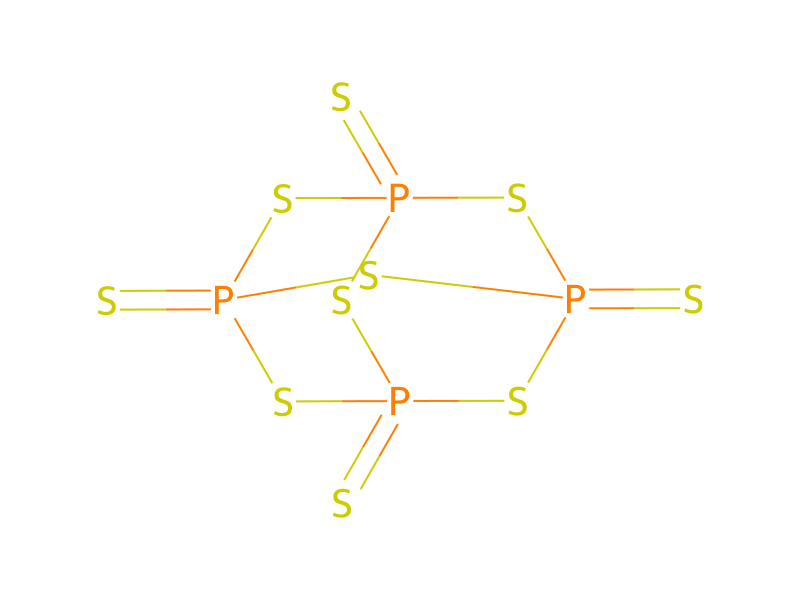
HCID 1049Pyridine3×HCID 14817Phosphorus sulfide (P2S5)HCID 28029113,5-Dichloroisonicotinamide

Produkt 1

HCID 27265733,5-Dichloropyridine-4-carbothioamideAusbeute 62,8 %

Reagenzien, Katalysatoren, Lösungsmittel 1

HCID 962WaterLösungsmittel3×

Reaktionsbedingungen

Temperatur
60 °C

Versuchsvorschrift

Into a 3000-mL three-necked round bottom flask equipped with a condenser, mechanical stirrer under an atmosphere of nitrogen was added pyridine (1500 mL), then 3,5-dichloro-4-pyridine-carboxamide (92.9 g., 0.486 mole) (which dissolved), and tetraphosphorus decasulfide (237 g., 0.535 moles)(which had almost dissolved then a bright yellow precipitate formed and an exotherm heated the mixture to 60° C.). The slurry was allowed to stir for 1 hr (temperature had dropped to 45° C.) and then the temperature was then raised and when it reached 100° C. all of the solids had dissolved and continued heating to 118° C. and was maintained at 115° C. for 4 hr. The mixture was poured into water (3750 mL) carefully as gas began to evolve and the temperature of the aqueous solution rose to approximately 45° C. and was allowed to sit at room temperature over two nights. To the resulting mixture was added water (6000 mL) and was extracted with methylene chloride (3×2000 mL), washed with water (3×1000 mL) and the solvent removed in vacuo to give a brownish yellow liquid, with much pyridine present. The vacuum pump was connected to the rotary evaporator to remove the residual pyridine. The residue (brown solid) was triturated with diethyl ether (3×1500 mL), treated with decolorizing carbon and the solvent removed in vacuo to give a solid which contained pyridine. The yellow solid was slurried in water (2×200 mL) and dried in vacuo at 60° C. to give 63.2 g of a light yellow solid (62.8% yield): mp 186-187° C.; TLC[50/50 ethyl acetate/hexanes] showed amide at Rf=0.31 and thioamide Rf=0.53; 1H NMR (DMSO-d6) d 10.6 (s, b, 1H), 10.0 (s, b, 1H), 8.6 (s, 2H).


Aufarbeitung

  1. customInto a 3000-mL three-necked round bottom flask equipped with a condenser, mechanical stirrer under an atmosphere of nitrogen
  2. customa bright yellow precipitate formed
  3. addition(temperature had dropped to 45° C.)
  4. temperaturethe temperature was then raised
  5. customreached 100° C.
  6. dissolutionhad dissolved
  7. temperaturecontinued heating to 118° C.
  8. temperaturewas maintained at 115° C. for 4 hr
  9. customrose to approximately 45° C.
  10. waitto sit at room temperature over two nights
  11. extractionwas extracted with methylene chloride (3×2000 mL)
  12. washwashed with water (3×1000 mL)
  13. customthe solvent removed in vacuo
  14. customto give a brownish yellow liquid
  15. customThe vacuum pump was connected to the rotary evaporator
  16. customto remove the residual pyridine
  17. customThe residue (brown solid) was triturated with diethyl ether (3×1500 mL)
  18. additiontreated with decolorizing carbon
  19. customthe solvent removed in vacuo
  20. customto give a solid which
  21. customdried in vacuo at 60° C.

Quellen und Nachweise

ORD-Eintrag
ord-efa6704e254d4812a44a261491a9fecc
Quelldatensatz
uspto-grants-2002_07
DOI
10.6084/m9.figshare.5104873.v1
Patentnummer
US06413992B1

Notizen zur Reaktion

Wird geladen…

Auf dieser SeiteKomponentenReaktionsbedingungenVersuchsvorschriftAufarbeitungQuellen und NachweiseNotizen zur Reaktion