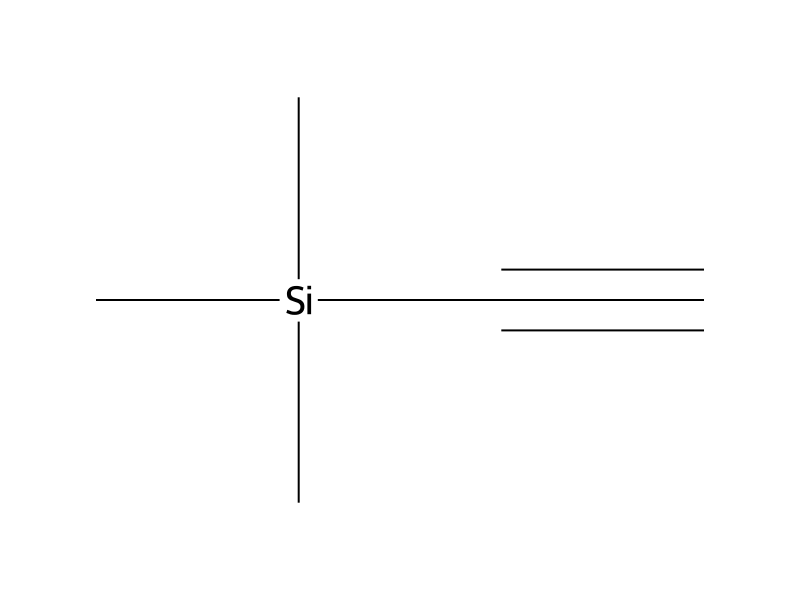
[Cl:1][C:2]1[CH:7]=[CH:6][CH:5]=[C:4](I)[C:3]=1[Cl:9].[CH3:10][Si:11]([C:14]#[CH:15])([CH3:13])[CH3:12]>C(N(CC)CC)C.C1C=CC(P(C2C=CC=CC=2)C2C=CC=CC=2)=CC=1.C1C=CC(P(C2C=CC=CC=2)C2C=CC=CC=2)=CC=1.Cl[Pd]Cl.[Cu]I>[Cl:9][C:3]1[C:2]([Cl:1])=[CH:7][CH:6]=[CH:5][C:4]=1[C:15]#[C:14][Si:11]([CH3:13])([CH3:12])[CH3:10]1,2-Dichloro-3-iodobenzene (4.95 g, 18.1 mmol), trimethylsilylacetylene (2 g, 20 mmol), bis(triphenylphosphine)palladium(II)chloride (245 mg, 0.35 mmol), and copper(I)iodide (45 mg, 0.24 mmol) were combined in triethylamine (120 mL) and heated at reflux for 45 minutes. The mixture was allowed to cool to room temperature and was then partitioned between diethyl ether and saturated sodium chloride. The organic phase was dried with sodium sulfate, filtered through celite, and the filtrate was concentrated under reduced pressure. The residue was taken directly on to the next step.