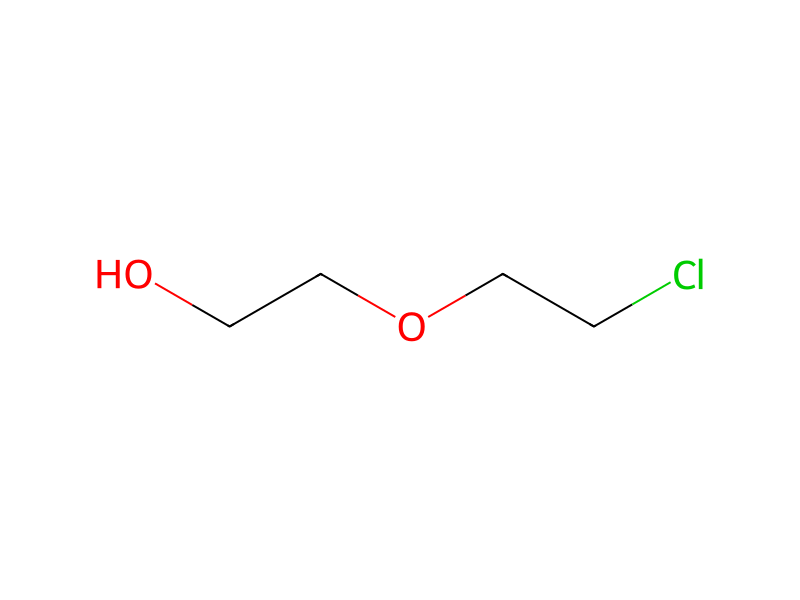
Cl[CH2:2][CH2:3][O:4][CH2:5][CH2:6][OH:7].C([C:10]1[CH:15]=[CH:14][C:13]([C:16]([C:27]2[CH:32]=[CH:31][CH:30]=[CH:29][CH:28]=2)=[C:17]2[CH2:22][C:21]([CH3:24])([CH3:23])[CH2:20][C:19]([CH3:26])([CH3:25])[CH2:18]2)=[CH:12][C:11]=1[OH:33])C.[C:34]([O-])([O-])=O.[K+].[K+]>CC(C)=O>[CH3:34][C:10]1[CH:15]=[CH:14][C:13]([C:16]([C:27]2[CH:28]=[CH:29][CH:30]=[CH:31][CH:32]=2)=[C:17]2[CH2:18][C:19]([CH3:26])([CH3:25])[CH2:20][C:21]([CH3:23])([CH3:24])[CH2:22]2)=[CH:12][C:11]=1[O:33][CH2:2][CH2:3][O:4][CH2:5][CH2:6][OH:7]2-(2-chloroethoxy)ethanol (139 mg, 1.12 mmol), compound 41 (150 mg, 0.45 mmol), and K2CO3 (185 mg, 1.34 mmol) were combined with dry acetone (5 mL) in a sealed microwave vessel. The mixture was heated at 100° C. for 20 minutes in a Personal Chemistry Emrys Optimizer microwave. The reaction was allowed to cool to room temperature and the solids were removed via filtration. The solids were rinsed twice with acetone and the solvent was removed in vacuuo. The reaction was purified using the Agilent semi prep HPLC (LUNA C18 column, 23 mL/min, 30-70% CH3CN-Water (TFA) to give 76 mg (40%) of the desired compound 50 as a white solid. 1H NMR (400 MHz, CDCl3): δ 0.91 (s, 6H), 0.93 (s, 6H), 1.23 (s, 2H), 1.95 (s, 2H), 1.96 (s, 2H), 2.13 (s, 3H), 3.7-3.78 (m, 2H), 3.87 (t, J=4.6 Hz, 2H), 4.1 (t, J=4.8 Hz, 2H), 6.72 (d, J=8.8 Hz, 2H), 7.13 (d, J=8.6 Hz, 2H), 7.10-7.20 (m, 3H), 7.20-7.30 (m, 2H).