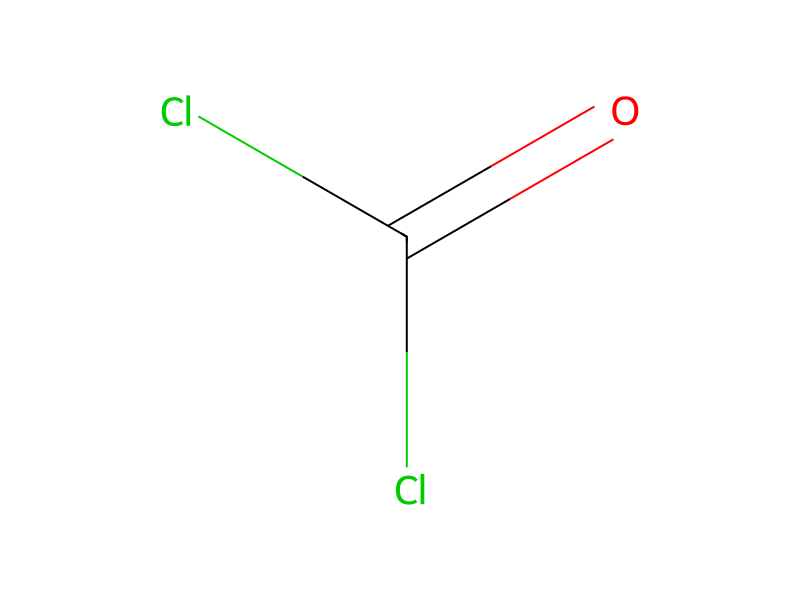
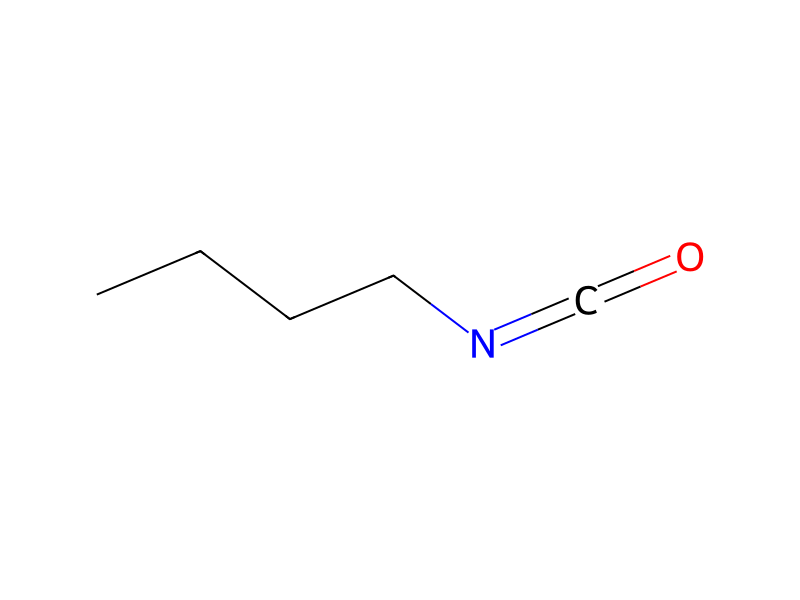
23.5 g of methyl 4-(aminosulfonyl)-5-methylthiophene-3-carboxylate (1) (100 mmol) were initially charged in 250 ml of xylene. From this mixture, approx. 70 ml of xylene were distilled off on a water separator. After addition of 9.9 g of n-butyl isocyanate (100 mmol), the reaction mixture was heated to reflux. Subsequently, 24 g of phosgene were introduced over a period of 3 h at such a rate that the temperature remained at approx. 130° C. (excess phosgene was kept in the system by a phosgene condenser). For workup, the mixture was cooled to room temperature and excess phosgene was removed by passing an argon stream through. Subsequently, distillative purification was effected, in which the butyl isocyanate can be recovered. The methyl 4-(isocyanatosulfonyl)-5-methylthiophene-3-carboxylate (2) can then be recovered as a colorless solid after a distillation under reduced pressure. 22 g of the methyl 4-(isocyanatosulfonyl)-5-methylthiophene-3-carboxylate (2) were obtained (83% of theory, content: 98%, b.p.: 120° C., 0.4 mbar). The identification and the determination of content were conducted by means of derivatization with methanol to the corresponding carbamate (1H NMR (400 MHz, d6DMSO): 2.72 (s), 3.61 (s), 3.79 (s), 8.00 (s), 11.96 (s)).