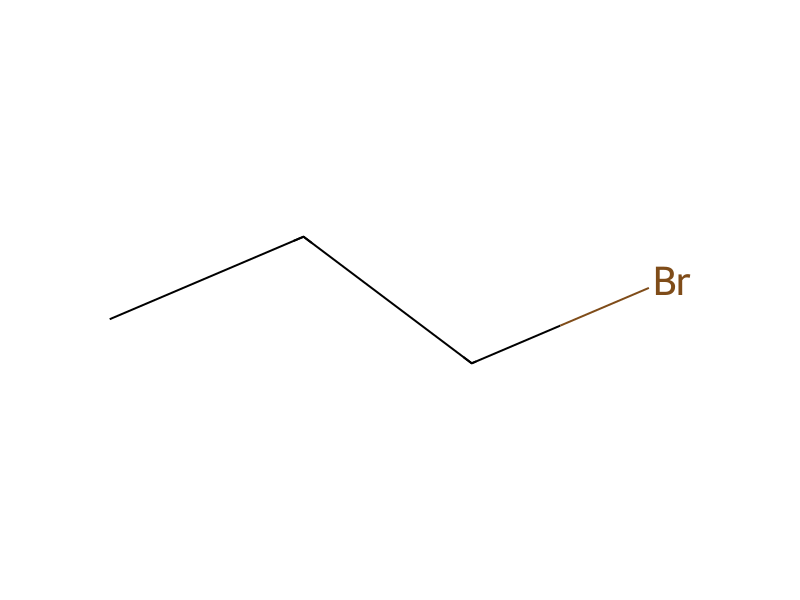
[N+:1]([C:4]1[CH:5]=[C:6]2[C:14](=[CH:15][CH:16]=1)[NH:13][C:12]1[CH2:11][CH2:10][CH2:9][CH2:8][C:7]2=1)([O-:3])=[O:2].C(=O)([O-])[O-].[K+].[K+].Br[CH2:24][CH2:25][CH3:26].O>CN(C=O)C>[N+:1]([C:4]1[CH:5]=[C:6]2[C:14](=[CH:15][CH:16]=1)[N:13]([CH2:24][CH2:25][CH3:26])[C:12]1[CH2:11][CH2:10][CH2:9][CH2:8][C:7]2=1)([O-:3])=[O:2]To a solution of 6-nitro-2,3,4,9-tetrahydro-1H-carbazole (250 mg, 1.16 mmol) and potassium carbonate (479 mg, 3.47 mmol) in DMF (8 mL) was added 1-bromopropane (0.263 mL, 2.89 mmol), and the mixture was stirred at 70° C. for 14 hr. The reaction mixture was cooled, and to the reaction solution was added water, and the mixture was extracted with ethyl acetate. The organic layer was washed with water and saturated brine, and dried, and the solvent was evaporated under reduced pressure. The obtained residue was purified by silica gel column chromatography (solvent gradient; 5 to 55% ethyl acetate/hexane) to give 6-nitro-9-propyl-2,3,4,9-tetrahydro-1H-carbazole (279 mg, 1.081 mmol, 93%) as a yellow powder.