Propylamine → 2-(Propylamino)-1-(pyridin-3-yl)ethanol
Reaktionsgleichung

Br.Br[CH2:3][C:4]([C:6]1[CH:7]=[N:8][CH:9]=[CH:10][CH:11]=1)=[O:5].[Na].[BH4-].[Na+].[CH2:15]([NH2:18])[CH2:16][CH3:17]>C(O)C>[N:8]1[CH:9]=[CH:10][CH:11]=[C:6]([CH:4]([OH:5])[CH2:3][NH:18][CH2:15][CH2:16][CH3:17])[CH:7]=1Komponenten
Edukt 4
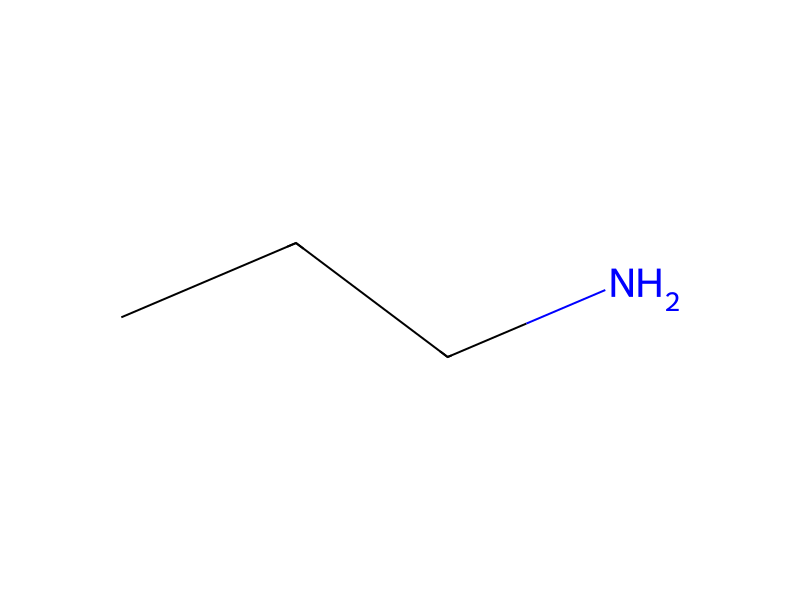



Produkt 1

Reagenzien, Katalysatoren, Lösungsmittel 1

Reaktionsbedingungen
- Temperatur
- 20 °C
Versuchsvorschrift
To 1.01 g (3.6 mmol) of 3-bromoacetylpyridine hydrobromide, prepared as described in Example 1, was added 20 ml of absolute ethanol and 0.5 g (13.2 mmol) of sodium boronhydride (NaBH4). The reaction mixture was stirred at 20° C. for 2 hours and filtered. To the filtrate containing 3-pyridyloxirane was added 0.7 ml (8.5 mmol) of n-propylamine and heated at reflux temperature of the reaction mixture for 5 hours. The reaction mixture was then evaporated to a dry residue and to it was added 20 ml of chloroform, a solid portion was filtered off, the filtrate was evaporated and an oil residue formed was purified by column chromatography on silica gel (silica gel 60, mobile phase: CHCl3:ethyl acetate=10:2). This yields 0.33 g (50%) of 1-(3-pyridyl)-2-propylaminoethanol in the form of the oil base (molecular weight: 180.25, gross formula: C10H16N2O)
Aufarbeitung
- filtrationfiltered
- additionTo the filtrate containing 3-pyridyloxirane
- temperatureheated
- temperatureat reflux temperature of the reaction mixture for 5 hours
- customThe reaction mixture was then evaporated to a dry residue and to it
- additionwas added 20 ml of chloroform
- filtrationa solid portion was filtered off
- customthe filtrate was evaporated
- customan oil residue formed
- customwas purified by column chromatography on silica gel (silica gel 60, mobile phase: CHCl3:ethyl acetate=10:2)
Quellen und Nachweise
- ORD-Eintrag
- ord-0b78a1d0a98643e4bcc4f27be197a0fa
- Quelldatensatz
- uspto-grants-2009_07
- Patentnummer
- US07560474B2
Notizen zur Reaktion
Wird geladen…