StartseiteMCPWorkbenchSkills
StartseiteWorkbenchBenachrichtigungenMein Bereich
llms.txt · MCP-AnleitungDatenschutz · Nutzungsbedingungen · Supportv1.8.3
  1. Startseite
  2. /Reaktion

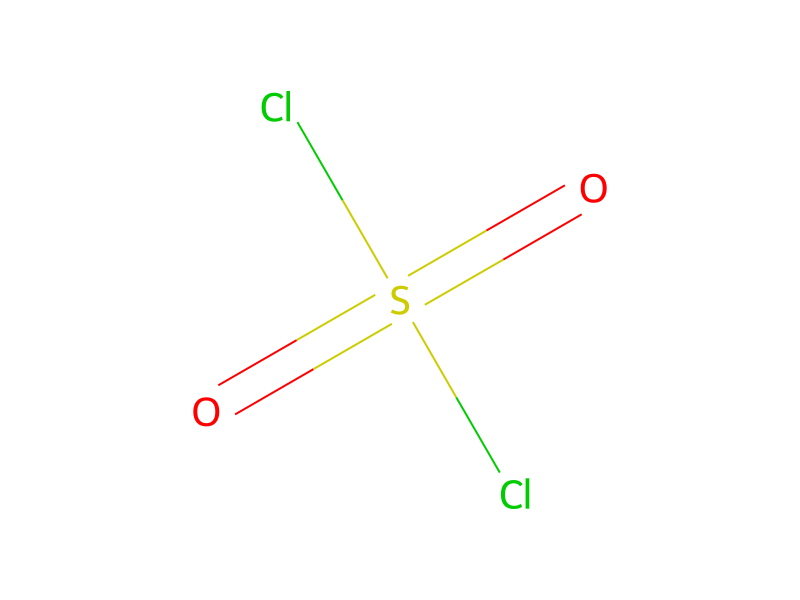
Sulfuryl chloride → 2-Chloro-4-(trifluoromethoxy)phenol

HRID 229349
Drucken

Reaktionsgleichung

Reaktionsgleichung von HRID 229349
[F:1][C:2]([F:12])([F:11])[O:3][C:4]1[CH:9]=[CH:8][C:7]([OH:10])=[CH:6][CH:5]=1.S(Cl)([Cl:16])(=O)=O>>[Cl:16][C:6]1[CH:5]=[C:4]([O:3][C:2]([F:11])([F:12])[F:1])[CH:9]=[CH:8][C:7]=1[OH:10]
KomponentenVersuchsvorschriftAufarbeitungQuellen und NachweiseNotizen zur Reaktion

Komponenten

3

Edukt 2

HCID 24648Sulfuryl chlorideHCID 70015p-(Trifluoromethoxy)phenol

Produkt 1

HCID 130447832-Chloro-4-(trifluoromethoxy)phenolAusbeute 94,1 %

Versuchsvorschrift

A solution of 4-trifluoromethoxyphenol (20 g, 0.11 mole) and sulfuryl chloride (18.20 mL, 0.22 mole) was stirred at room temperature for five hours. The excess of sulfuryl chloride was evaporated by rotary evaporator. The residue was dissolved in 50 mL of dichloromethane and washed with 50 mL of H2O. The organic layer was separated, dried over MgSO4, filtered and concentrated to yield 22 g of the product. The crude product was purified over a silica gel column using 10% ethyl acetate in hexane to yield 16.4 g of the product. 1H-NMR (DMSO, 500-MHz), δ 10.59 (s, 1H), 7.43 (d, J=2.75 Hz, 1H), 7.18 (dd, J1=2.75 Hz, J2=7.16 Hz, 1H), 7.03 (d, J=7.16 Hz, 1H). MS (electro-spray) [M−H] 211.4.

Aufarbeitung

  1. customThe excess of sulfuryl chloride was evaporated by rotary evaporator
  2. dissolutionThe residue was dissolved in 50 mL of dichloromethane
  3. washwashed with 50 mL of H2O
  4. customThe organic layer was separated
  5. dry with materialdried over MgSO4
  6. filtrationfiltered
  7. concentrationconcentrated

Quellen und Nachweise

ORD-Eintrag
ord-8a4f09244e734935af7613d203f22a95
Quelldatensatz
uspto-grants-2009_07
DOI
10.6084/m9.figshare.5104873.v1
Patentnummer
US07563792B2

Notizen zur Reaktion

Auf dieser SeiteKomponentenVersuchsvorschriftAufarbeitungQuellen und NachweiseNotizen zur Reaktion