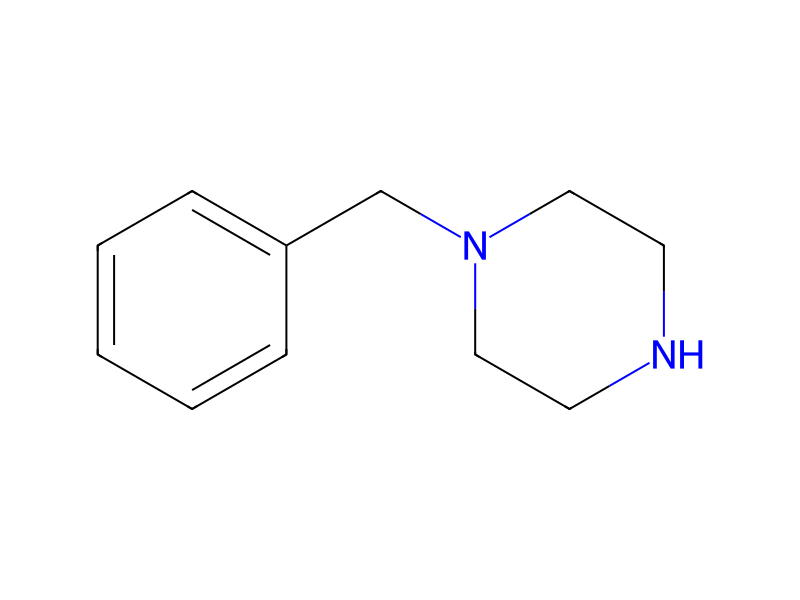
[CH2:1]([N:8]1[CH2:13][CH2:12][NH:11][CH2:10][CH2:9]1)[C:2]1[CH:7]=[CH:6][CH:5]=[CH:4][CH:3]=1.C([Li])CCC.F[C:20]1[CH:25]=[CH:24][CH:23]=[CH:22][C:21]=1[C:26]1[O:27][CH:28]=[CH:29][N:30]=1>C1COCC1>[CH2:1]([N:8]1[CH2:13][CH2:12][N:11]([C:20]2[CH:25]=[CH:24][CH:23]=[CH:22][C:21]=2[C:26]2[O:27][CH:28]=[CH:29][N:30]=2)[CH2:10][CH2:9]1)[C:2]1[CH:3]=[CH:4][CH:5]=[CH:6][CH:7]=1A solution of N-benzylpiperazine (3.56 g, 20.2 mmol) in 25 mL of THF was cooled to 0° C. and then n-butyllithium was added. The mixture was stirred at 0° C. for 30 minutes and at room temperature for an additional hour. The mixture was cooled to 0° C. and then 2-fluoro-1-oxazol-2-ylbenzene (1.1 g, 6.75 mmol) was slowly added. The mixture was allowed to warm to room temperature and stirred at room temperature for 90 minutes. The mixture was quenched with water and the aqueous layer was separated and extracted with ethyl acetate (3×30 mL). The combined extract was washed with brine, dried (MgSO4) and concentrated. The residue was purified on silica gel by column chromatography eluting with hexanes/ethyl acetate (10:1) to give 4-benzyl-1-(2-oxazol-2-ylphenyl)piperazine (0.805 g, 2.52 mmol).
Wird geladen…