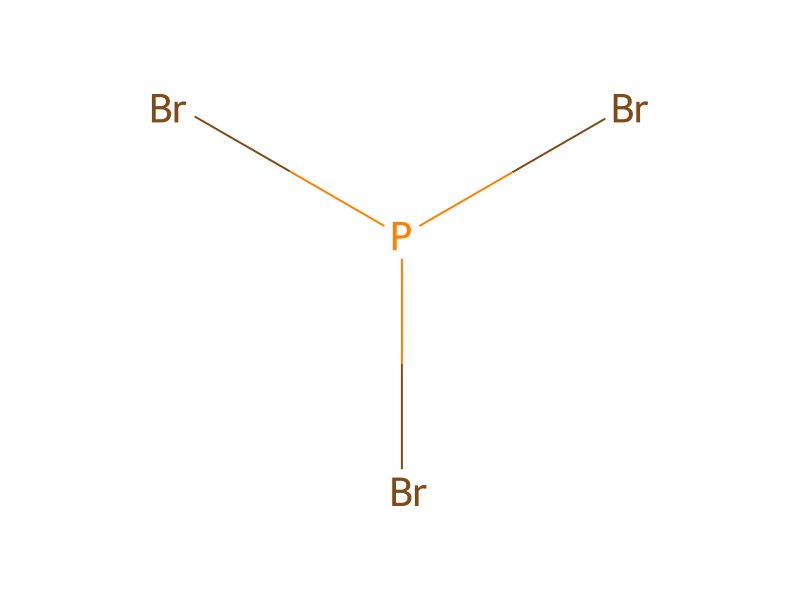
Phosphorus tribromide → 2,3-Dimethoxybenzyl bromide
Reaktionsgleichung

C(O)(=O)C.C(C1C=CC=C(O)C=1O)CCCCCCCCCCCCCCCCCC.[CH3:32][O:33][C:34]1[C:41]([O:42][CH3:43])=[CH:40][CH:39]=[CH:38][C:35]=1[CH:36]=O.[BH4-].[Na+].P(Br)(Br)[Br:47]>>[CH3:32][O:33][C:34]1[C:41]([O:42][CH3:43])=[CH:40][CH:39]=[CH:38][C:35]=1[CH2:36][Br:47]Komponenten
5




Versuchsvorschrift
The nonadecylcatechol acetate (NDC-AC) used in the tests was prepared as follows: 2, 3 dimethoxybenzaldehyde was reduced in the presence of sodium borohydride and the reduction product reacted with phosphorus tribromide to form 2, 3 dimethoxybenzylbromide. The benzylbromide reaction product was refluxed with triphenyl phosphine in xylene to form 2, 3 dimethoxybenzyl-triphenyl phosphonium bromide which was then reacted with octadecanal in the presence of butyl lithium to form 2, 3 dimethoxy-nonadecenylbenzene. Subsequent steps of reduction and reaction with boron tribromide produced 3-nonadecylcatechol which was purified by chromatography. The catechol was acetylated with acetic anhydride in pyridine to form the acetate (NDC-AC).