Reaktionsgleichung

[NH:1]([C:8]1[CH:16]=[C:15]([C:17](O)=[O:18])[C:14]([NH:20][C:21]2[CH:26]=[CH:25][CH:24]=[CH:23][CH:22]=2)=[CH:13][C:9]=1[C:10](O)=[O:11])[C:2]1[CH:7]=[CH:6][CH:5]=[CH:4][CH:3]=1.COC1C=CC(NC2C=C(C(O)=O)C(NC3C=CC(OC)=CC=3)=CC=2C(O)=O)=CC=1>CO>[CH:24]1[CH:25]=[C:26]2[C:17]([C:15]3[C:14]([NH:20][C:21]2=[CH:22][CH:23]=1)=[CH:13][C:9]1[C:10]([C:7]2[C:2]([NH:1][C:8]=1[CH:16]=3)=[CH:3][CH:4]=[CH:5][CH:6]=2)=[O:11])=[O:18]Komponenten
4
Edukt 2


Produkt 1
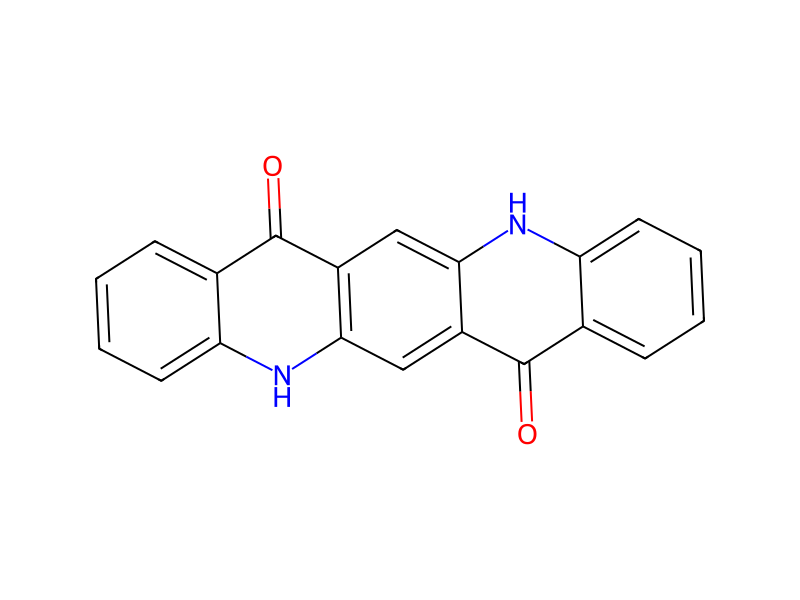
Reagenzien, Katalysatoren, Lösungsmittel 1

Reaktionsbedingungen
- Temperatur
- 112 °C
Versuchsvorschrift
A mixture (one part) of 2,5-dianilino-terephthalic acid (96%) and 2,5-dianisidino-terephthalic acid (4%) was dissolved in polyphosphoric acid (4 parts at 117.5%). The solution was heated and drowned into methanol as described in Example 3. The mixture was then heated for 4 hours at 112° C. to produce a transparent, beta-phase quinacridone pigment, which exhibited an X-ray diffraction spectrum identical to that of Examples 5 thus confirming the product to be a pure beta-phase quinacridone.
Aufarbeitung
- temperatureThe solution was heated
Quellen und Nachweise
- ORD-Eintrag
- ord-a8d4a10c912e44bfb9c4c4176d2021e6
- Quelldatensatz
- uspto-grants-2002_12
- Patentnummer
- US06494949B2
Verknüpfte Notizen
Wird geladen…