Indole → Ethyl 2-(4-amino-3-iodophenyl)acetate
HRID 2301322
Reaktionsgleichung

N1C2C(=CC=CC=2)C=C1.[NH2:10][C:11]1[CH:16]=[CH:15][C:14]([CH2:17][C:18]([O:20][CH2:21][CH3:22])=[O:19])=[CH:13][CH:12]=1.[I:23]Cl>>[NH2:10][C:11]1[CH:12]=[CH:13][C:14]([CH2:17][C:18]([O:20][CH2:21][CH3:22])=[O:19])=[CH:15][C:16]=1[I:23]Komponenten
4
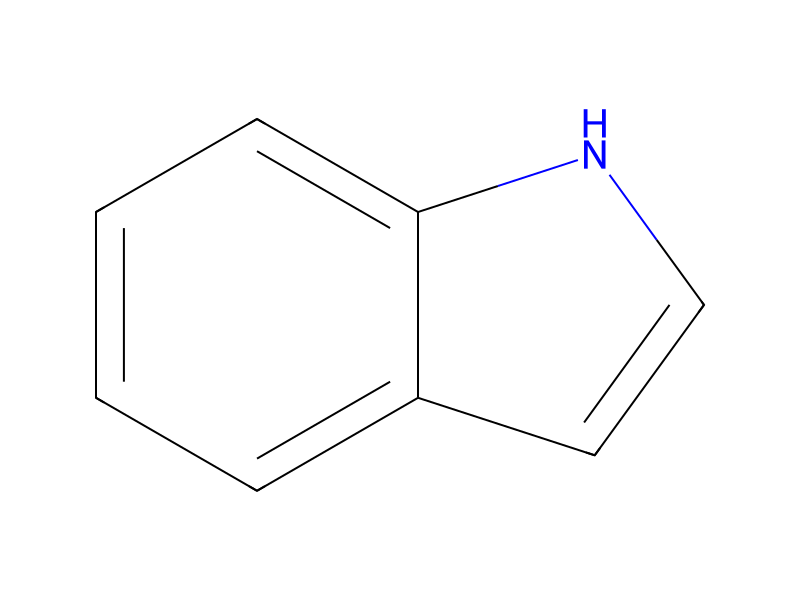
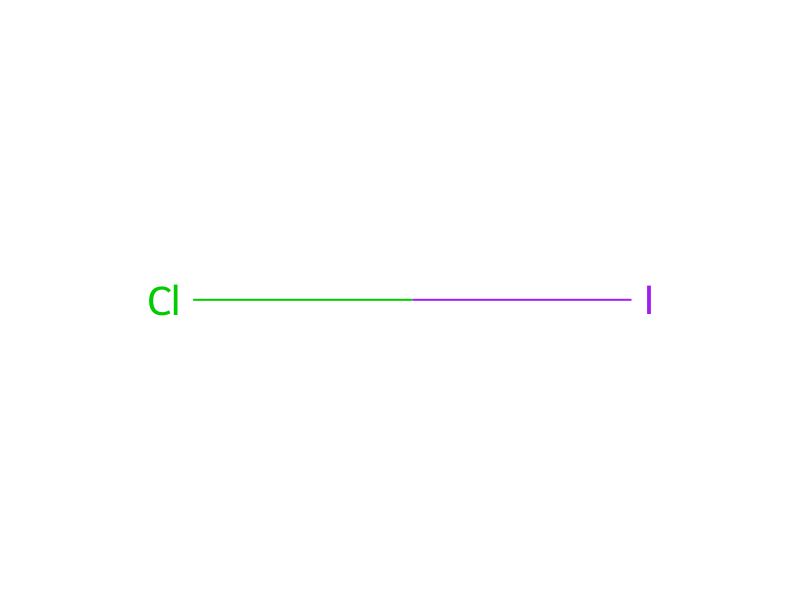


Versuchsvorschrift
Generally, Scheme 1 illustrates a synthetic route to the indole-containing fused ring compounds of the present invention. An ethyl 2-(4-aminophenyl)acetate is iodinated with a reagent such as, for example, iodine monochloride, to afford the corresponding ethyl 2-(4-amino-3-iodophenyl)acetate. This amine is treated with a 3-oxoacetate to produce the desired ethyl 3-(phenylamino)but-2-enoate. Formation of the indole is then achieved upon treatment with a catalyst, such as, for example, palladium acetate. The resulting ethyl 2-[3-(ethoxycarbonyl)indol-5-yl]acetate is saponified with a base such as potassium hydroxide to afford the 2-[3-(ethoxycarbonyl)indol-5-yl]acetic acid. The acid is subsequently converted to the amide by treatment with an amine and a suitable coupling agent, such as, for example, N,N′-carbonyldiimidazole or dicyclohexylcarbodiimide. Cyclization of the amide (e.g., in the presence of phosphorous oxychloride via the Bischler-Napieralske reaction) affords the dihydroisoquinoline, which is then treated with, for example, oxomethyl 2,2-dimethylpropanoate to produce the corresponding trihydroisoquinoline-2-carbaldehyde-ene. This compound is further cyclized and subsequently reduced to form the 6,11,12,13,12a,6a-hexahydroisoquinolino[2,1-b]pyrrolo[2,3-h]isoquinoline. The R4 group (as found in Formula I) can be present on the starting ethyl 2-(4-aminophenyl)acetate or introduced at various steps of the scheme (such as depicted in Scheme 1), depending on the nature of the group. The indole nitrogen can also be alkylated with various procedures known in the art.