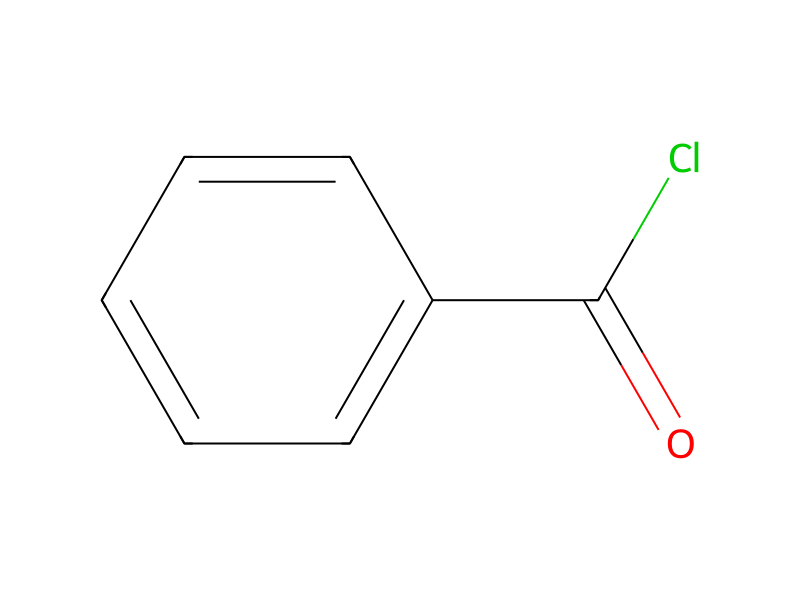
Cl.[NH2:2][CH:3]([CH2:7][CH:8]1[C:16]2[C:11](=[CH:12][CH:13]=[CH:14][CH:15]=2)[NH:10][C:9]1=[O:17])[C:4]([OH:6])=[O:5].C(N(CC)CC)C.[C:25](Cl)(=[O:32])[C:26]1[CH:31]=[CH:30][CH:29]=[CH:28][CH:27]=1.O>CN(C)C=O>[C:25]([NH:2][CH:3]([CH2:7][CH:8]1[C:16]2[C:11](=[CH:12][CH:13]=[CH:14][CH:15]=2)[NH:10][C:9]1=[O:17])[C:4]([OH:6])=[O:5])(=[O:32])[C:26]1[CH:31]=[CH:30][CH:29]=[CH:28][CH:27]=11.3 Grams of 2-amino-3-(oxindol-3-yl)propionic acid hydrochloride prepared in reference example 1 was dissolved in 80 ml of dimethylformamide. To this solution was added 1.2 g of triethylamine, then under an ice-cooled condition, 0.8 g of benzoyl chloride was added dropwise thereto. The reaction mixture was stirred under an ice-cooled condition for 3 hours, then the reaction mixture was concentrated under a reduced pressure, to the residue thus obtained was added water, the crystals formed were collected by filtration. Recrystallized from ethanol-water to obtain 0.5 g of 2-benzamido-3-(oxindol-3-yl)propionic acid in the form of light brown powdery substance. Melting point: 140°-142° C. (decomp.) [α]D20 -66° (C=0.1, methanol)