Reaktionsgleichung

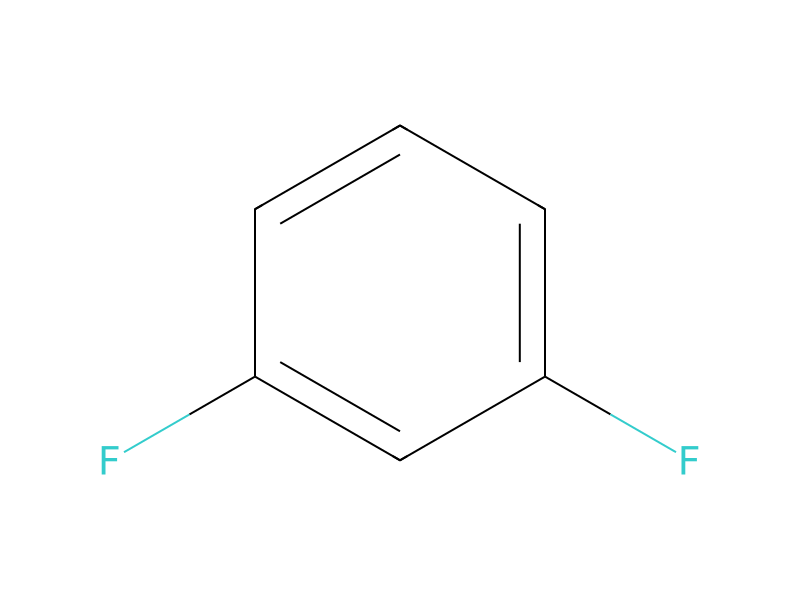
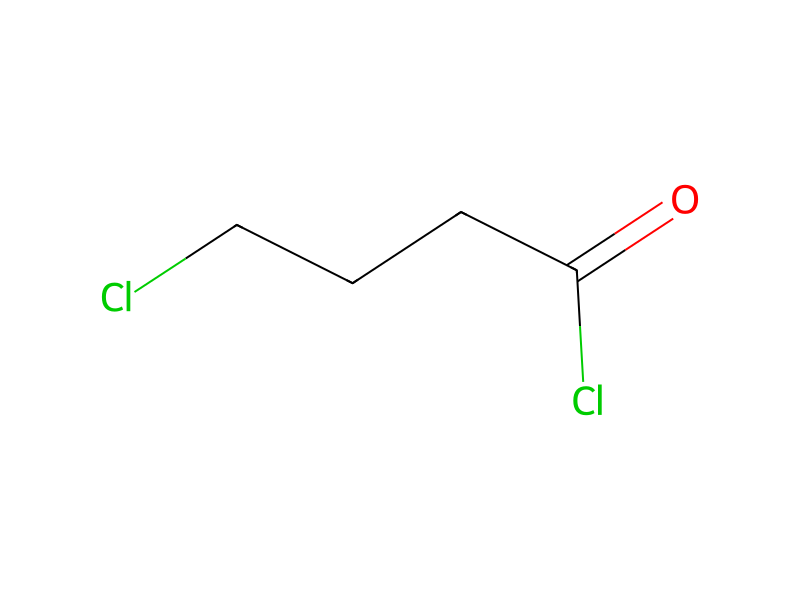
[Cl:1][CH2:2][CH2:3][CH2:4][C:5](Cl)=[O:6].[F:8][C:9]1[CH:14]=[CH:13][CH:12]=[C:11]([F:15])[CH:10]=1.[Cl-].[Al+3].[Cl-].[Cl-]>C(Cl)Cl>[Cl:1][CH2:2][CH2:3][CH2:4][C:5]([C:12]1[CH:13]=[CH:14][C:9]([F:8])=[CH:10][C:11]=1[F:15])=[O:6]Komponenten
5
Edukt 3

Produkt 1

Reagenzien, Katalysatoren, Lösungsmittel 1

Versuchsvorschrift
255 g (1.81 mols) of 4-chlorobutyryl chloride are added dropwise to a mixture of 200 g (1.75 mols) of 1,3-difluorobenzene and 256 g (1.92 mols) of anhydrous aluminum chloride at room temperature, while stirring. The mixture is stirred at 30° C. for 4 hours and then poured onto 1,200 g of ice. 1,200 ml of methylene chloride are added, the organic phase is separated off, the aqueous phase is extracted with methylene chloride and the combined organic phases are washed with water, dried over sodium sulphate and concentrated by stripping off the solvent under reduced pressure. The residue which remains is distilled. 326 g (85% of theory) of 2,4-difluorophenyl 3-chloropropyl ketone are obtained in this manner.
Aufarbeitung
- stirringThe mixture is stirred at 30° C. for 4 hours
- customthe organic phase is separated off
- extractionthe aqueous phase is extracted with methylene chloride
- washthe combined organic phases are washed with water
- dry with materialdried over sodium sulphate
- concentrationconcentrated
- distillationThe residue which remains is distilled
Quellen und Nachweise
- ORD-Eintrag
- ord-c62facb23d654e3e81f07915e4d8f847
- Quelldatensatz
- uspto-grants-1989_07
- Patentnummer
- US04845116
Verknüpfte Notizen
Wird geladen…