Reaktionsgleichung

[C:1]([OH:5])(=[O:4])[CH:2]=[CH2:3].[C:6]([NH:10][CH2:11][O:12][S:13]([CH2:16][CH2:17][CH3:18])(=[O:15])=[O:14])(=[O:9])[CH:7]=[CH2:8].[Na:19].S(OOS([O-])(=O)=O)([O-])(=O)=O.[K+].[K+].C(OCCOCC1OC1)C1OC1.[OH-].[Na+:45]>O>[C:1]([O-:5])(=[O:4])[CH:2]=[CH2:3].[Na+:45].[C:6]([NH:10][CH2:11][O:12][S:13]([CH2:16][CH2:17][CH3:18])(=[O:15])=[O:14])(=[O:9])[CH:7]=[CH2:8].[Na:19]Komponenten
Edukt 5



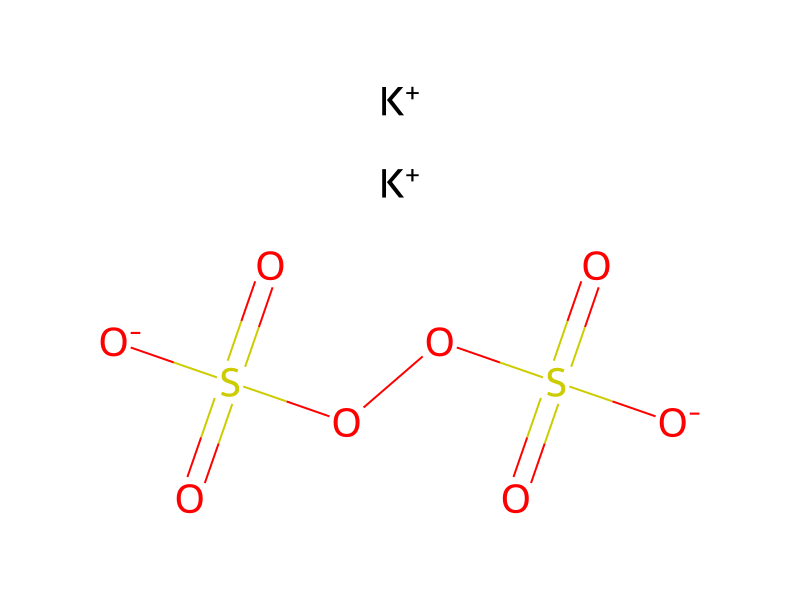

Produkt 1

Reagenzien, Katalysatoren, Lösungsmittel 1

Versuchsvorschrift
51.1 g of acrylic acid was diluted with 22.6 g of water and neutralized with 75.0 g of a 30 wt. % aqueous sodium hydroxide solution under cooling. Thereafter, 143.3 of a 40 wt. % aqueous sodium acrylamidomethylpropanesulfonate solution was added thereto, and then 7.9 g of a 5.2 wt. % aqueous potassium persulfate solution and 0.082 g of epoxy bifunctional cross linking agent (ethylene glycol diglycidyl ether) were added thereto to prepare a homogeneous solution as the aqueous monomer/initiator solution. Thereafter, the same procedure as that of Example 18 was repeated, thereby providing 131.5 g of a sodium acrylate/sodium acrylamidomethylpropanesulfonate copolymer. The resultant polymer was in the form of distorted granular particles having an average diameter of 580 μm and a bulk density of 0.44 g/ml. The measurement was conducted on the resultant polymer particles in the same manner as that of Example 4. The results are given in Table 2.
Aufarbeitung
- temperatureunder cooling
- additionwere added
- customto prepare a homogeneous solution as the aqueous monomer/initiator solution
Quellen und Nachweise
- ORD-Eintrag
- ord-986895c7ec954b40895eaa075305c3c3
- Quelldatensatz
- uspto-grants-1997_01
- Patentnummer
- US05596056
Verknüpfte Notizen
Wird geladen…