StartseiteMCPWorkbenchSkills
StartseiteWorkbenchBenachrichtigungenMein Bereich
llms.txt · MCP-AnleitungDatenschutz · Nutzungsbedingungen · Supportv1.8.0
  1. Startseite
  2. /Reaktion

Cesium carbonate → 5-chloro-4-(3-ethoxyphenoxy)-2-fluoro-N-(methylsulfonyl)benzamide

HRID 2359260
Notizen
Druckvorschau

Reaktionsgleichung

Reaktionsgleichung von HRID 2359260
[Cl:1][C:2]1[C:3](F)=[CH:4][C:5]([F:12])=[C:6]([CH:11]=1)[C:7]([O:9]C)=O.[CH2:14]([O:16][C:17]1[CH:18]=[C:19]([OH:23])[CH:20]=[CH:21][CH:22]=1)[CH3:15].C(=O)([O-])[O-].[Cs+].[Cs+].[CH3:30][S:31]([NH2:34])(=[O:33])=[O:32].CCN=C=NCCCN(C)C.Cl>CN(C)C=O.CN(C)C1C=CN=CC=1.ClCCl.C(#N)C.O>[Cl:1][C:2]1[C:3]([O:23][C:19]2[CH:20]=[CH:21][CH:22]=[C:17]([O:16][CH2:14][CH3:15])[CH:18]=2)=[CH:4][C:5]([F:12])=[C:6]([CH:11]=1)[C:7]([NH:34][S:31]([CH3:30])(=[O:33])=[O:32])=[O:9]
KomponentenReaktionsbedingungenVersuchsvorschriftAufarbeitungQuellen und NachweiseNotizen zur Reaktion

Komponenten

10

Edukt 5

HCID 10796Cesium carbonateHCID 693063-EthoxyphenolHCID 72879MethanesulfonamideHCID 27239391,3-Propanediamine, N'-(ethylcarbonimidoyl)-N,N-dimethyl-, monohydrochlorideHCID 58042369Methyl 5-chloro-2,4-difluorobenzoate

Produkt 1

HCID 56592536
5-chloro-4-(3-ethoxyphenoxy)-2-fluoro-N-(methylsulfonyl)benzamide
Ausbeute 12,8 %

Reagenzien, Katalysatoren, Lösungsmittel 4

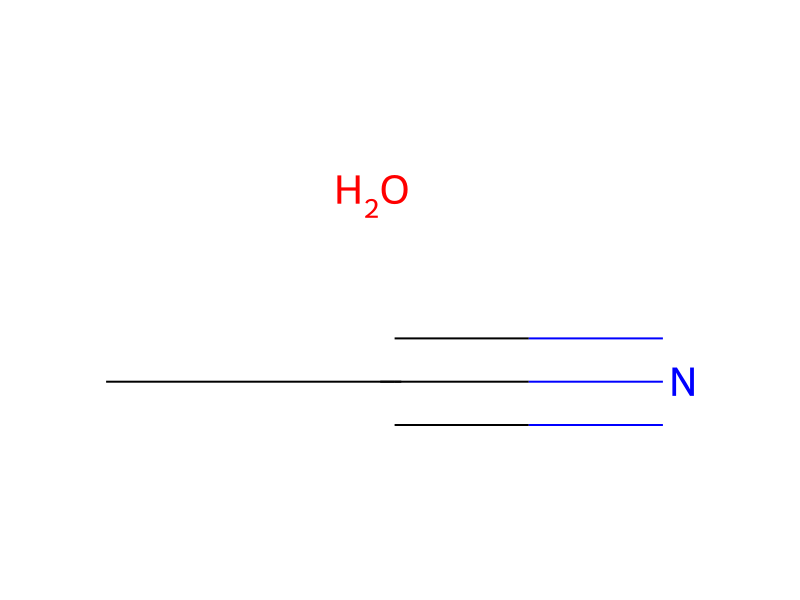
HCID 142844-(Dimethylamino)pyridineKatalysatorHCID 6228DimethylformamideLösungsmittelHCID 6344DichloromethaneLösungsmittelHCID 18373917Acetonitrile--water (1/1)Lösungsmittel

Reaktionsbedingungen

Temperatur
120 °C

Versuchsvorschrift

To solution of methyl 5-chloro-2,4-difluorobenzoate (25.9 mg, 0.125 mmol) and 3-ethoxyphenol (17.3 mg, 0.125 mmol) in dimethyl formamide (0.5 mL) was added cesium carbonate (82 mg, 0.25 mmol), the mixture was shaken at 120° C. for 16 hours, filtered and evaporated in vacuo. Water (1 mL) was added and extracted with ethyl acetate (3×1 mL), the combined organic layers were dried over sodium sulphate, filtered and evaporated in vacuo. The residue was dissolved in THF (0.7 mL) and to this solution was added a 1M aqueous solution of lithium hydroxide (0.7 mL) and the mixture was shaken at 30° C. for 16 hours. The reaction mixture was evaporated in vacuo, a 1M aqueous solution of hydrochloric acid (0.7 mL) was added and extracted with ethyl acetate (3×1 mL). The combined organic layers were dried over anhydrous sodium sulphate, filtered and evaporated in vacuo. To this residue was added methanesulfonamide (28.6 mg, 0.300 mmol) and a solution of 4-dimethylaminopyridine (24.4 mg, 0.200 mmol) and EDCl (38.3 mg, 0.200 mmol) in dichloromethane (1 mL), the solution was shaken at 30° C. for 16 hours and evaporated in vacuo. The crude product was purified on a HPLC column (Sepax BR-C18 100*21.2 mm*5 μm, acetonitrile-water (0.1% trifluoroacetic acid) gradient to yield 6.2 mg (16 μmol) 5-chloro-4-(3-ethoxyphenoxy)-2-fluoro-N-(methylsulfonyl)benzamide.


Aufarbeitung

  1. filtrationfiltered
  2. customevaporated in vacuo
  3. additionWater (1 mL) was added
  4. extractionextracted with ethyl acetate (3×1 mL)
  5. dry with materialthe combined organic layers were dried over sodium sulphate
  6. filtrationfiltered
  7. customevaporated in vacuo
  8. dissolutionThe residue was dissolved in THF (0.7 mL) and to this solution
  9. additionwas added a 1M aqueous solution of lithium hydroxide (0.7 mL)
  10. stirringthe mixture was shaken at 30° C. for 16 hours
  11. customThe reaction mixture was evaporated in vacuo
  12. additiona 1M aqueous solution of hydrochloric acid (0.7 mL) was added
  13. extractionextracted with ethyl acetate (3×1 mL)
  14. dry with materialThe combined organic layers were dried over anhydrous sodium sulphate
  15. filtrationfiltered
  16. customevaporated in vacuo
  17. customevaporated in vacuo
  18. customThe crude product was purified on a HPLC column (Sepax

Quellen und Nachweise

ORD-Eintrag
ord-85d40699507e472f859356d72200a774
Quelldatensatz
uspto-grants-2014_04
DOI
10.6084/m9.figshare.5104873.v1
Patentnummer
US08685977B2

Notizen zur Reaktion

Wird geladen…

Auf dieser SeiteKomponentenReaktionsbedingungenVersuchsvorschriftAufarbeitungQuellen und NachweiseNotizen zur Reaktion