StartseiteMCPSkillsWorkbenchOpenChem
StartseiteWorkbenchBenachrichtigungenMein Bereich
llms.txt · skill.md · MCP-AnleitungDatenschutz · Nutzungsbedingungen · Supportv1.8.5
  1. Startseite
  2. /Reaktion

Methanol → (4R,5R)-4-(2-fluoro-5-((5-fluoropyridin-3-yl)ethynyl)pyridin-3-yl)-5-(3-fluorophenyl)oxazolidin-2-one

HRID 2362450
Drucken

Reaktionsgleichung

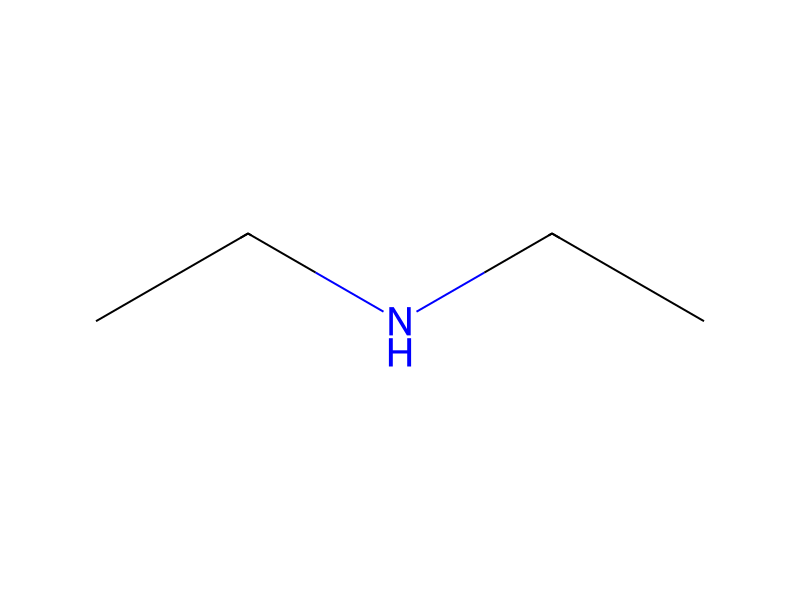
Br[C:2]1[CH:3]=[C:4]([C@@H:9]2[C@@H:13]([C:14]3[CH:19]=[CH:18][CH:17]=[C:16]([F:20])[CH:15]=3)[O:12][C:11](=[O:21])[NH:10]2)[C:5]([F:8])=[N:6][CH:7]=1.[C:22]([C:24]1[CH:25]=[N:26][CH:27]=[C:28]([F:30])[CH:29]=1)#[CH:23].C1(P(C2C=CC=CC=2)C2C=CC=CC=2)C=CC=CC=1.CO>C(N(CC)CC)C.C(=O)=O.[Cu]I.Cl[Pd](Cl)([P](C1C=CC=CC=1)(C1C=CC=CC=1)C1C=CC=CC=1)[P](C1C=CC=CC=1)(C1C=CC=CC=1)C1C=CC=CC=1>[CH2:5]([NH:6][CH2:7][CH3:2])[CH3:4].[F:8][C:5]1[C:4]([C@@H:9]2[C@@H:13]([C:14]3[CH:19]=[CH:18][CH:17]=[C:16]([F:20])[CH:15]=3)[O:12][C:11](=[O:21])[NH:10]2)=[CH:3][C:2]([C:23]#[C:22][C:24]2[CH:25]=[N:26][CH:27]=[C:28]([F:30])[CH:29]=2)=[CH:7][N:6]=1


KomponentenReaktionsbedingungenVersuchsvorschriftAufarbeitungQuellen und NachweiseNotizen zur Reaktion

Komponenten

10

Edukt 4

HCID 887MethanolHCID 11776TriphenylphosphineHCID 569723593-Ethynyl-5-fluoropyridineHCID 69083956(4R,5R)-4-(5-bromo-2-fluoropyridin-3-yl)-5-(3-fluorophenyl)oxazolidin-2-one

Produkt 2

HCID 8021DiethylamineAusbeute 0,1 %
HCID 69082769
(4R,5R)-4-(2-fluoro-5-((5-fluoropyridin-3-yl)ethynyl)pyridin-3-yl)-5-(3-fluorophenyl)oxazolidin-2-one
Ausbeute 147,6 %

Reagenzien, Katalysatoren, Lösungsmittel 4

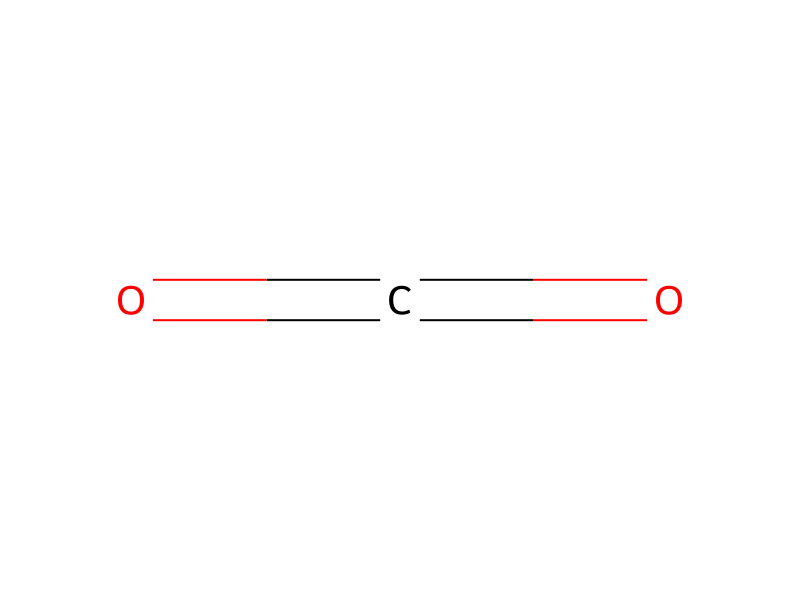
HCID 24350Copper(1+) iodide; Copper(I) iodide; Cuprous iodide; Cuprous iodide (CuI)KatalysatorHCID 178418476HCID 178418476, VerbindungKatalysatorHCID 280Carbon DioxideLösungsmittelHCID 8471TriethylamineLösungsmittel

Reaktionsbedingungen

Temperatur
90 °C

Versuchsvorschrift

To a 15 ml sealable vial was added a mixture of (4R,5R)-4-(5-bromo-2-fluoropyridin-3-yl)-5-(3-fluorophenyl)oxazolidin-2-one (30 mg, 0.084 mmol) and its regioisomer in triethylamine (2 mL). To this suspension was added 3-ethynyl-5-fluoropyridine (12.28 mg, 0.101 mmol), triphenylphosphine (6.65 mg, 0.025 mmol) and copper(I) iodide (0.322 mg, 1.690 μmol). The solution was degassed with nitrogen for 20 min, then bis(triphenylphosphine)palladium(II) chloride (1.186 mg, 1.690 μmol) was quickly added and the vial was sealed, heated to 90° C., and allowed to stir overnight. The next day the suspension had turned homogeneous and the reaction was cooled to room temperature and the solvent was evaporated in vacuo. The crude residue was purified by silica gel chromotagraphy 1% MeOH/99% CH2Cl2 affording a single peak. This single peak was a 60:40 mixture of regioisomers and was subsequently purified by chiral supercritical fluid chromatography Chiralpak AD-H column, 4.6×250 mm, 5 um particle size mobile phase: 35% MeOH in CO2 (w/0.1% diethylamine) column temp: 35 C flow rate: 2 mL/min., affording (4R,5R)-4-(2-fluoro-5-((5-fluoropyridin-3-yl)ethynyl)pyridin-3-yl)-5-(3-fluorophenyl)oxazolidin-2-one (25 mg, 0.062 mmol, 73.4% yield). 1H-NMR (CDCl3, 400 MHz) δ 8.63 (s, 1H), 8.51 (d, J=4.0, 1H), 8.45 (s, 1H), 8.14 (dd, J=8.0, 4.0, 1H), 7.69-7.64 (m, 1H), 7.60-7.54 (m, 1H), 7.50-7.43 (m, 1H), 7.21-7.13 (m, 2H), 6.05 (brs, 1H), 5.39 (d, J=4.0, 1H), 5.04 (d, J=4.0, 1H), LC/Mass spec. (Analytical HPLC method 2): RT=2.01 min. Mass=396.20 (MH)+.

Aufarbeitung

  1. additionTo a 15 ml sealable vial was added
  2. customThe solution was degassed with nitrogen for 20 min
  3. customthe vial was sealed
  4. temperaturethe reaction was cooled to room temperature
  5. customthe solvent was evaporated in vacuo
  6. customThe crude residue was purified by silica gel chromotagraphy 1% MeOH/99% CH2Cl2 affording a single peak
  7. additiona 60:40 mixture of regioisomers
  8. customwas subsequently purified by chiral supercritical fluid chromatography Chiralpak AD-H column, 4.6×250 mm, 5 um particle size mobile phase

Quellen und Nachweise

ORD-Eintrag
ord-83825df92c7141959fef6d845d33fc6f
Quelldatensatz
uspto-grants-2014_04
DOI
10.6084/m9.figshare.5104873.v1
Patentnummer
US08691821B2

Notizen zur Reaktion

Auf dieser SeiteKomponentenReaktionsbedingungenVersuchsvorschriftAufarbeitungQuellen und NachweiseNotizen zur Reaktion