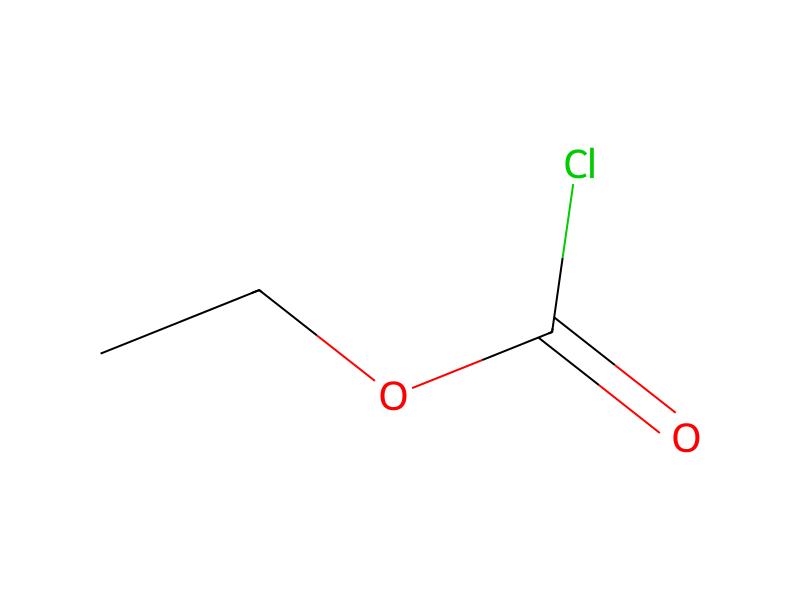
[C:1]([C:3]1[C:12]2[C:7](=[CH:8][CH:9]=[CH:10][CH:11]=2)[CH:6]=[CH:5][CH:4]=1)#[CH:2].CN1C(C)(C)CCCC1(C)C.Cl[C:25]([O:27][CH2:28][CH3:29])=[O:26]>CN(C)C1C=CN=CC=1.C1C=CC([P]([Pd]([P](C2C=CC=CC=2)(C2C=CC=CC=2)C2C=CC=CC=2)([P](C2C=CC=CC=2)(C2C=CC=CC=2)C2C=CC=CC=2)[P](C2C=CC=CC=2)(C2C=CC=CC=2)C2C=CC=CC=2)(C2C=CC=CC=2)C2C=CC=CC=2)=CC=1.C(#N)C>[C:3]1([C:1]#[C:2][C:25]([O:27][CH2:28][CH3:29])=[O:26])[C:12]2[C:7](=[CH:8][CH:9]=[CH:10][CH:11]=2)[CH:6]=[CH:5][CH:4]=1First, ethyl 1-naphthylpropiolate was prepared. A mixture of 1-ethynylnaphthalene (7.7 g, 50.6 mmol), 4-(dimethylamino)pyridine (0.06 g, 0.5 mmol), 1,2,2,6,6-pentamethylpiperidine (8.8 g, 55.7 mmol), and acetonitrile (120 mL) was sparged with nitrogen for 10 min, and then tetrakis(triphenylphosphine)palladium(0) (1.3 g, 1.1 mmol) was added. The mixture was sparged with nitrogen for 10 min, heated to reflux, treated dropwise with ethyl chloroformate (12.1 g, 111.3 mmol), and held at reflux for 2 h. The reaction mixture was cooled to ambient and diluted with ligroin. The solution was washed three times with water and then with brine, dried (Na2SO4), and concentrated to deposit a brown oil. The crude product was purified by column chromatography to provide 4.0 g (36% of theory) of ethyl 1-naphthylpropiolate. 1H NMR (CDCl3): δ 1.40 (t, 3H), 4.33 (q, 2H), 7.50 (m, 3H), 7.90 (m, 3H), 8.30 (d, 1H).