Reaktionsgleichung

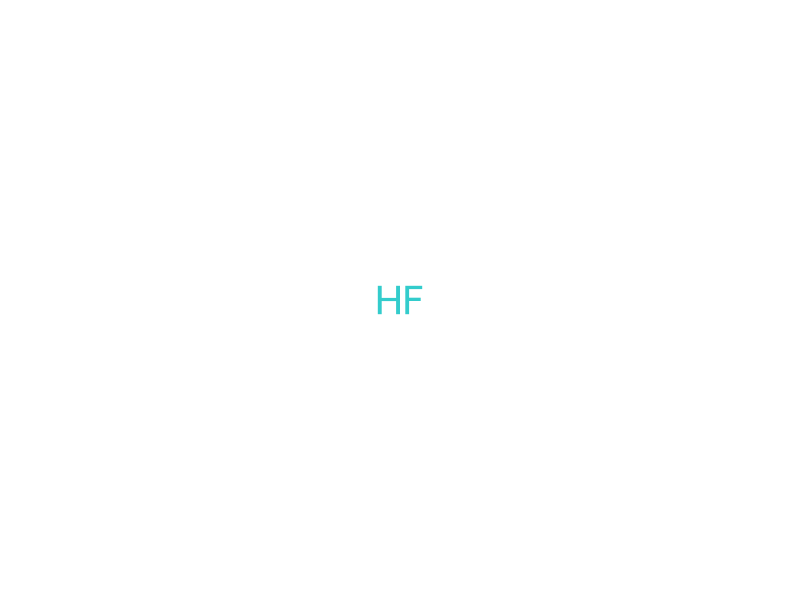
[F-:1].[K+].ClCl.[Cl:5][C:6]1[C:14]([Cl:15])=[C:13]([Cl:16])[C:12]([Cl:17])=[CH:11][C:7]=1[C:8](Cl)=[O:9].F>>[Cl:5][C:6]1[C:14]([Cl:15])=[C:13]([Cl:16])[C:12]([Cl:17])=[CH:11][C:7]=1[C:8]([F:1])=[O:9]Komponenten




Versuchsvorschrift
The quantity of potassium fluoride to be used depends on the number of chlorine atoms which are to be exchanged. At least one mole of KF is used, but in general 1.1-1.5 mole, for 1 chlorine atom. A maximum of 2 moles of KF is used for 1 chlorine; beyond this, the quantity of KF has virtually no effect on the degree of fluorination, and the process becomes uneconomic. However, it is possible to save part of the costly KF when the 2,3,4,5-tetrachlorobenzoyl chloride is previously fluorinated with hydrofluoric acid, and the 2,3,4,5-tetrachlorobenzoyl fluoride, which results in virtually quantitative yield from this reaction, is used for the Cl/F exchange reaction with KF. Because of the greater activation by the more electronegative fluorocarbonyl group, its greater thermal stability, and the reduced load of KCl in the reaction mixture, this two-stage fluorination leads to an overall improvement in the balance of the nuclear fluorination.
Quellen und Nachweise
- ORD-Eintrag
- ord-f6ea9c1710c84fef9ffe31014c225fa9
- Quelldatensatz
- uspto-grants-1994_11
- Patentnummer
- US05362909
Verknüpfte Notizen
Wird geladen…