Diisopropylethylamine → 2-(3-Fluorophenyl)pyrimidine-5-carboxylic acid-(4-fluoroindol-1-yl)amide
HRID 2381937
Reaktionsgleichung

[F:1][C:2]1[CH:3]=[C:4]([C:8]2[N:13]=[CH:12][C:11]([C:14]([OH:16])=O)=[CH:10][N:9]=2)[CH:5]=[CH:6][CH:7]=1.CN(C(ON1N=NC2C=CC=NC1=2)=[N+](C)C)C.F[P-](F)(F)(F)(F)F.OC1C=CC2NN=NC=2N=1.[NH2:51][N:52]1[C:60]2[C:55](=[C:56]([F:61])[CH:57]=[CH:58][CH:59]=2)[CH:54]=[CH:53]1.CCN(C(C)C)C(C)C>CN(C=O)C>[F:61][C:56]1[CH:57]=[CH:58][CH:59]=[C:60]2[C:55]=1[CH:54]=[CH:53][N:52]2[NH:51][C:14]([C:11]1[CH:12]=[N:13][C:8]([C:4]2[CH:5]=[CH:6][CH:7]=[C:2]([F:1])[CH:3]=2)=[N:9][CH:10]=1)=[O:16]Komponenten
7
Edukt 5
 HCID 81531Diisopropylethylamine
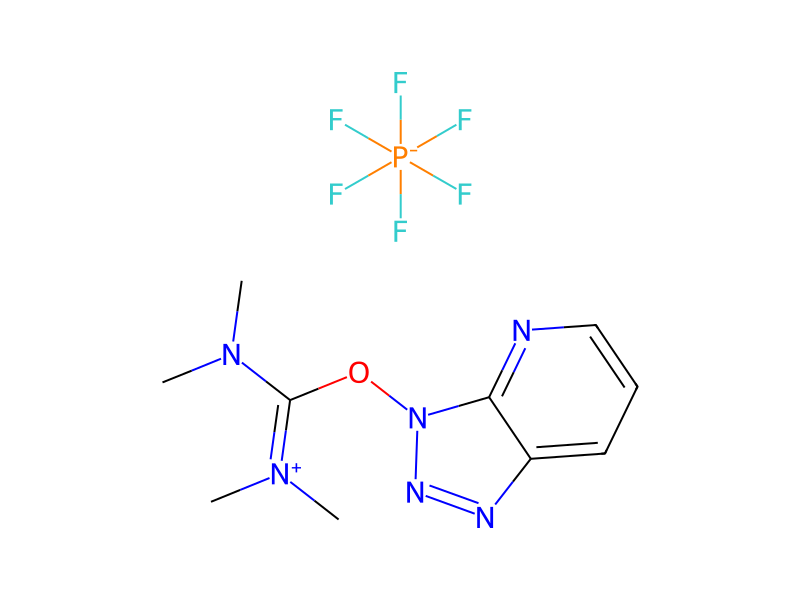 HCID 9886157Methanaminium, N-((dimethylamino)(3H-1,2,3-triazolo(4,5-b)pyridin-3-yloxy)methylene)-N-methyl-, hexafluorophosphate(1-) (1:1)
 HCID 450733632-(3-Fluorophenyl)pyrimidine-5-carboxylic acid
 HCID 685531711-Amino-4-fluoroindole
 HCID 178515788HCID 178515788, Verbindung

