1-Ethyl-3-(3'-dimethylaminopropyl)carbodiimide → (R)-1-((2S,3S)-3-hexyl-4-oxooxetan-2-yl)hept-5-en-2-yl 2-methanamidoethanoate
HRID 2382221
Reaktionsgleichung

[CH2:1]([C@H:7]1[C@H:10]([CH2:11][C@H:12]([OH:18])[CH2:13][CH2:14][CH:15]=[CH:16][CH3:17])[O:9][C:8]1=[O:19])[CH2:2][CH2:3][CH2:4][CH2:5][CH3:6].C(N=C=NCCCN(C)C)C.[CH:31]([NH:33][CH2:34][C:35](O)=[O:36])=[O:32]>CN(C)C1C=CN=CC=1.C1(C)C(C)=CC=CC=1>[CH:31]([NH:33][CH2:34][C:35]([O:18][C@H:12]([CH2:13][CH2:14][CH:15]=[CH:16][CH3:17])[CH2:11][C@H:10]1[C@H:7]([CH2:1][CH2:2][CH2:3][CH2:4][CH2:5][CH3:6])[C:8](=[O:19])[O:9]1)=[O:36])=[O:32]Komponenten
6
Edukt 3
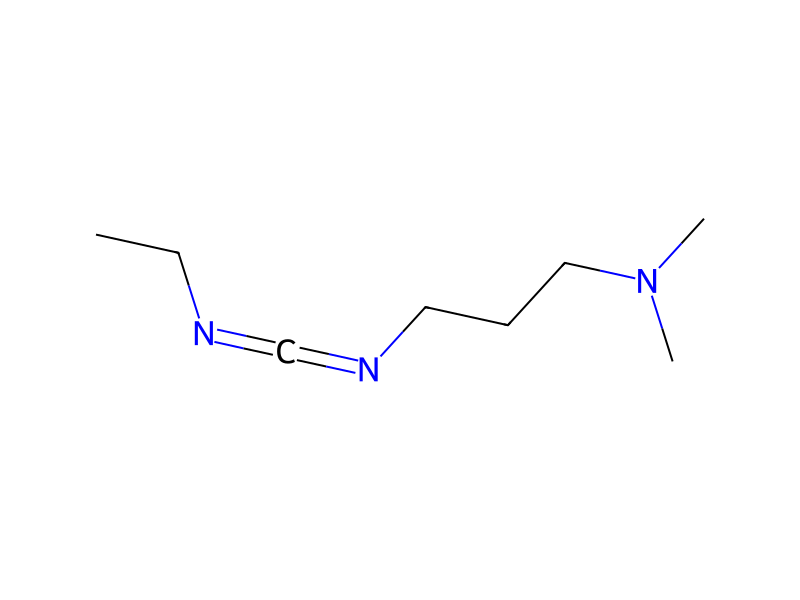


Produkt 1

Reagenzien, Katalysatoren, Lösungsmittel 2

