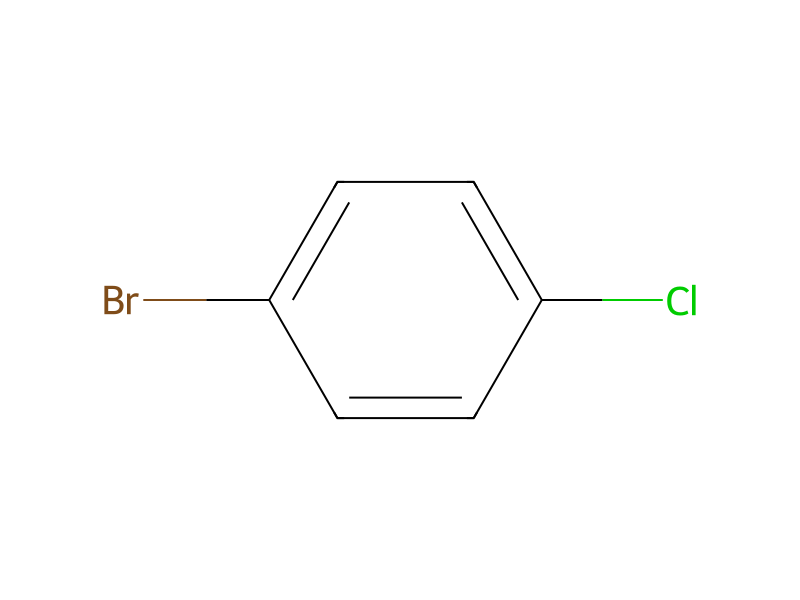
To a solution of 1-bromo-4-chlorobenzene (20 g) in tetrahydrofuran (260 ml) was added magnesium (turnings, 7.47 g). The mixture was vigorously stirred at room temperature. When the temperature of the mixture reached 40° C., the reaction vessel was cooled in a water bath. A solution of 1-bromo-4-chlorobenzene (38.9 g) in tetrahydrofuran (90 ml), was added dropwise to the mixture at 34°-40° C., followed by stirring for an hour at 30° C. To the mixture was added dropwise a solution of 4-[(2R)-2-(3,4,5,6-tetrahydro-2H-pyran-2-yloxy)propionyl]morpholine (60 g) in tetrahydrofuran (60 ml) over the period of 15 minutes at 0° C. The mixture was stirred for 3 hours at room temperature. To the reaction mixture were added a saturated aqueous ammonium chloride solution (120 ml) and water (100 ml). The mixture was extracted with ethyl acetate (500 ml). The organic layer was washed with water, dried over magnesium sulfate and distilled under reduced pressure. The residue was purified by silica gel column chromatography (silica gel 900 g, eluent: hexane/ethyl acetate=30:1→10:1) to give (2R)-4'-chloro-2-(3,4,5,6-tetrahydro-2H-pyran-2-yloxy)propiophenone (66 g) as a pale yellow oily substance.