Reaktionsgleichung

[O:1]=[CH:2][C@@H:3]([C@@H:5]([C@H:7]([C@H:9]([CH2:11][OH:12])[OH:10])[OH:8])[OH:6])[OH:4].O=C[C@H]([C@@H]([C@H]([C@H](CO)O)O)O)O.O=C[C@@H]([C@H]([C@H](CO)O)O)O.S(=O)(=O)(O)O>[O-][Mo]([O-])(=O)=O.[Na+].[Na+]>[O:1]=[CH:2][C@@H:3]([C@H:5]([C@@H:7]([C@@H:9]([CH2:11][OH:12])[OH:10])[OH:8])[OH:6])[OH:4]Komponenten
6
Edukt 4



Produkt 1

Reagenzien, Katalysatoren, Lösungsmittel 1
Versuchsvorschrift
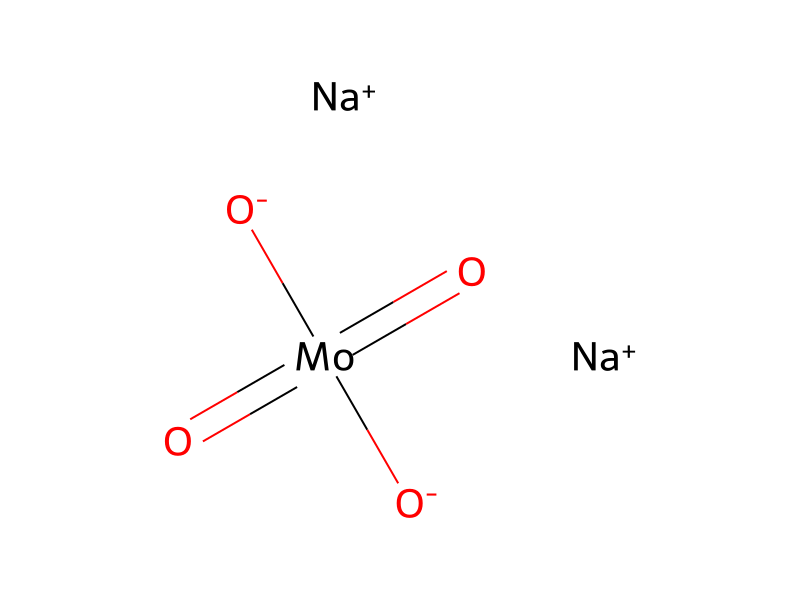
To 20 mL of an aqueous feedstock containing 12.6 wt. % L-mannose, 0.07 wt. % L-glucose, and 0.5 wt. % L-arabinose was added sodium molybdate in an amount calculated to afford the desired concentration of Mo. Solutions were adjusted to their desired pH by addition of 10% sulfuric acid and epimerization was followed with time. From the resulting plots of time glucose yield the time for conversion to a 60:40 glucose:mannose mixture (60% yield) was determined. The times as a function of temperature, Mo concentration, and pH are summarized in Table 2.
Aufarbeitung
- customto afford the desired concentration of Mo
Quellen und Nachweise
- ORD-Eintrag
- ord-f94d9b7781354a1992004ad153ee4352
- Quelldatensatz
- uspto-grants-1988_01
- Patentnummer
- US04718405
Verknüpfte Notizen
Wird geladen…