StartseiteMCPWorkbenchSkills
StartseiteWorkbenchBenachrichtigungenMein Bereich
llms.txt · MCP-AnleitungDatenschutz · Nutzungsbedingungen · Supportv1.8.0
  1. Startseite
  2. /Reaktion

Hydrochloric Acid → HCID 22636849, Verbindung

HRID 2416323
Notizen
Druckvorschau

Reaktionsgleichung

Reaktionsgleichung von HRID 2416323
Br[C:2]1[CH:7]=[CH:6][C:5]([NH:8]C(=O)C(F)(F)F)=[C:4]([CH3:15])[CH:3]=1.B1(B2OC(C)(C)C(C)(C)O2)OC(C)(C)C(C)(C)O1.C([O-])(=O)C.[K+].[CH2:39]([O:41][C:42]1[CH:43]=[C:44]([CH:54]=[C:55]([O:58]COC)[C:56]=1I)[CH2:45][C:46]1[C:47]([NH2:53])=[N:48][C:49]([NH2:52])=[N:50][CH:51]=1)[CH3:40].C(=O)([O-])[O-].[Na+].[Na+].[OH-].[Na+].Cl>O1CCOCC1.C(O)C.CO.Cl[Pd](Cl)([P](C1C=CC=CC=1)(C1C=CC=CC=1)C1C=CC=CC=1)[P](C1C=CC=CC=1)(C1C=CC=CC=1)C1C=CC=CC=1.C(COC)OC>[NH2:8][C:5]1[CH:6]=[CH:7][C:2]([C:56]2[C:55]([OH:58])=[CH:54][C:44]([CH2:45][C:46]3[C:47]([NH2:53])=[N:48][C:49]([NH2:52])=[N:50][CH:51]=3)=[CH:43][C:42]=2[O:41][CH2:39][CH3:40])=[CH:3][C:4]=1[CH3:15]
KomponentenReaktionsbedingungenVersuchsvorschriftAufarbeitungQuellen und NachweiseNotizen zur Reaktion

Komponenten

13

Edukt 7

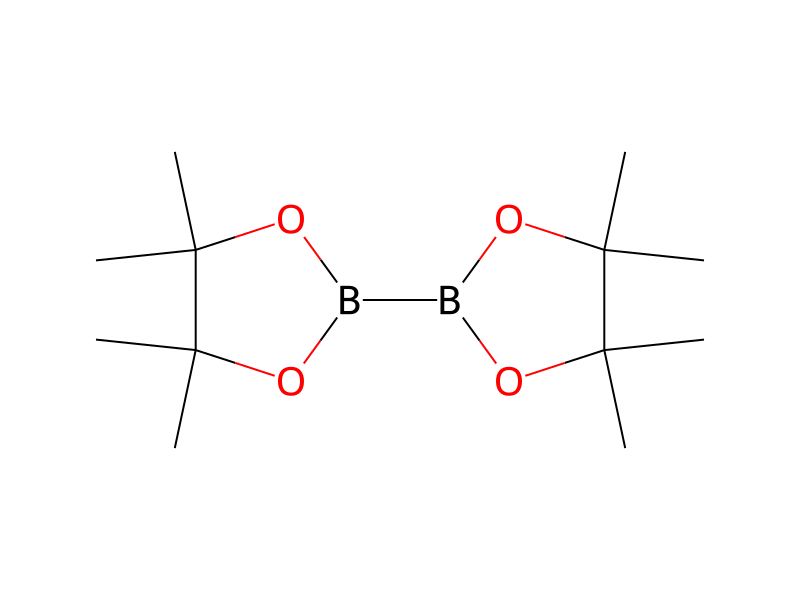
HCID 313Hydrochloric AcidHCID 10340Sodium CarbonateHCID 14798Sodium HydroxideHCID 517044Potassium AcetateHCID 789606N-(4-bromo-2-methylphenyl)-2,2,2-trifluoroacetamideHCID 2733548Bis(pinacolato)diborane
HCID 22636933
HCID 22636933, Verbindung

Produkt 1

HCID 22636849HCID 22636849, VerbindungAusbeute 57,3 %

Reagenzien, Katalysatoren, Lösungsmittel 5

HCID 178418476HCID 178418476, VerbindungKatalysatorHCID 702EthanolLösungsmittelHCID 887MethanolLösungsmittelHCID 80711,2-DimethoxyethaneLösungsmittelHCID 312751,4-DioxaneLösungsmittel

Reaktionsbedingungen

Temperatur
85 °C

Versuchsvorschrift

N-(4-Bromo-2-methyl-phenyl)-2,2,2-trifluoro-acetamide (described in example 4f) (4.9 g; 17.5 mmol), bis(pinacolato)diboron (6.66 g; 26.25 mmol), potassium acetate (5.15 g; 52.5 mmol) and bis(triphenylphosphine)palladium(II) dichloride (PdCl2(PPh3)2) (737 mg; 1.05 mmol) are suspended in dioxane (175 ml; dried over a molecular sieve), and four times the suspension is evacuated and ventilated with argon, with vigorous stirring. The mixture is then stirred at a bath temperature of 85° C. for 4 hours. After cooling to room temperature, the reaction mixture is concentrated and dimethoxyethane (10 ml), tetrakis-triphenylphosphine-palladium (1.21 g; 1.05 mmol), 5-(3-ethoxy-4-iodo-5-methoxymethoxy-benzyl)-pyrimidine-2,4-diamine (4.51 g; 10.5 mmol) and a 2 M aqueous sodium carbonate solution (70 ml) are added. The reaction mixture is stirred for approx. 25 hours under argon at 85° C. (bath temperature), cooled to room temperature and filtered with suction and the filtrate is concentrated. The residue obtained is dissolved in ethanol (210 ml), a 1 N aqueous sodium hydroxide solution is added and the mixture stirred is for 4½ hours in an oil bath of 50° C. The mixture is poured on to ice-water and extracted twice with ethyl acetate. The organic phases are washed with a saturated aqueous sodium chloride solution, dried over magnesium sulphate, filtered with suction and concentrated. The residue is chromatographed over silica gel (810 g) with methylene chloride/methanol/NH4OH 19/1/0.05. The red powder obtained (2.6 g) is suspended in methanol (100 ml), a 4.5 N aqueous hydrochloric acid (30 ml; 137 mmol) is added and the mixture is stirred for 45 minutes in an oil bath at 60° C. The methanol is evaporated, the residue is dissolved in water (200 ml) and the pH is adjusted to approx. 10 with NH4OH conc., while stirring. After stirring for 30 minutes at room temperature, the suspension is filtered with suction and the residue is washed with water and dried under a high vacuum. 2.20 g (33%) 4′-amino-4-(2,4-diamino-pyrimidin-5-ylmethyl)-6-ethoxy-3′-methyl-biphenyl-2-ol are obtained as a light-red powder.


Aufarbeitung

  1. customdried over a molecular sieve), and four times the suspension
  2. customis evacuated
  3. temperatureAfter cooling to room temperature
  4. concentrationthe reaction mixture is concentrated
  5. stirringThe reaction mixture is stirred for approx. 25 hours under argon at 85° C. (bath temperature)
  6. temperaturecooled to room temperature
  7. filtrationfiltered with suction
  8. concentrationthe filtrate is concentrated
  9. customThe residue obtained
  10. stirringthe mixture stirred
  11. waitis for 4½ hours in an oil bath of 50° C
  12. extractionextracted twice with ethyl acetate
  13. washThe organic phases are washed with a saturated aqueous sodium chloride solution
  14. dry with materialdried over magnesium sulphate
  15. filtrationfiltered with suction
  16. concentrationconcentrated
  17. customThe residue is chromatographed over silica gel (810 g) with methylene chloride/methanol/NH4OH 19/1/0.05
  18. customThe red powder obtained (2.6 g)
  19. stirringthe mixture is stirred for 45 minutes in an oil bath at 60° C
  20. customThe methanol is evaporated
  21. dissolutionthe residue is dissolved in water (200 ml)
  22. stirringwhile stirring
  23. stirringAfter stirring for 30 minutes at room temperature
  24. filtrationthe suspension is filtered with suction
  25. washthe residue is washed with water
  26. customdried under a high vacuum

Quellen und Nachweise

ORD-Eintrag
ord-7f9ff43e9ab5438aab7645605d4a0fb0
Quelldatensatz
uspto-grants-2004_11
DOI
10.6084/m9.figshare.5104873.v1
Patentnummer
US06821980B1

Notizen zur Reaktion

Wird geladen…

Auf dieser SeiteKomponentenReaktionsbedingungenVersuchsvorschriftAufarbeitungQuellen und NachweiseNotizen zur Reaktion