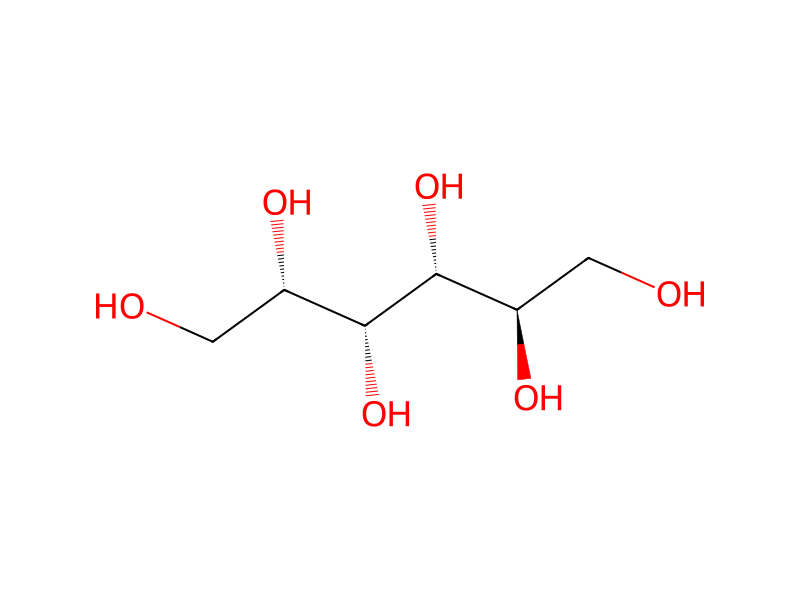
Sorbitol → L-enantiomer
Reaktionsgleichung

[OH:1][CH2:2][C:3]([C@H:5]([C@@H:7]([C@H:9]([CH2:11][OH:12])[OH:10])[OH:8])[OH:6])=[O:4].O=[C:14]1O[C@H]([C@H](CO)O)[C:17](O)=[C:15]1O.O[CH2:26][C@@H:27]([C@H:29]([C@@H]([C@@H](CO)O)O)O)O.OCC([C@@H]([C@H]([C@@H](CO)O)O)O)=O>>[CH3:14][C:15]1([CH3:17])[O:4][C@:3]2([O:12][CH2:11][C@@H:9]3[O:10][C:27]([CH3:29])([CH3:26])[O:8][C@@H:7]3[C:5]2=[O:6])[CH2:2][O:1]1Komponenten
5



Versuchsvorschrift
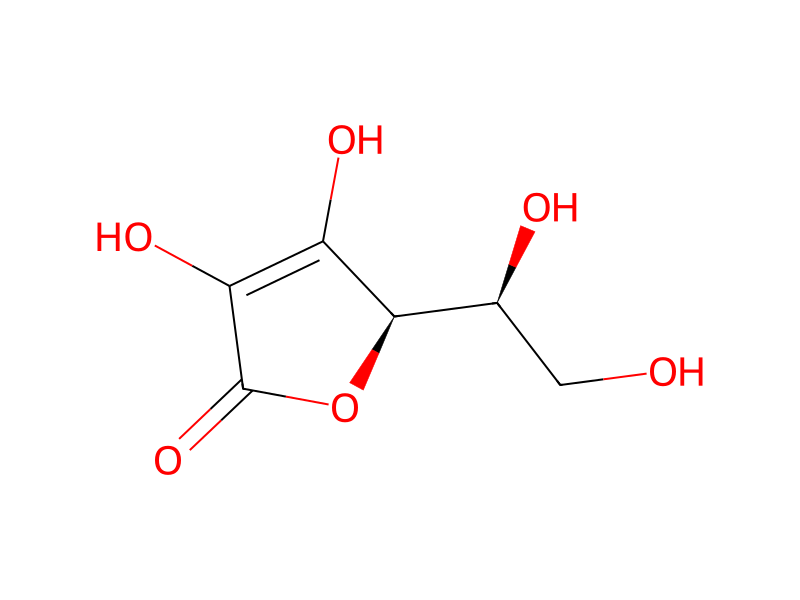
L-sorbose is an important intermediate for the synthesis of L-ascorbic acid (vitamin C) by the Reichstein method (see FIG. 1). When D-sorbitol is chemically oxidized, approximately a half of the product becomes D-sorbose, whereas when D-sorbitol is brought into contact with a microorganism having an SLDH activity, only an L-enantiomer is obtained in a yield of about 95%. Therefore, a fermentation method has been conventionally used for converting D-sorbitol to L-sorbose.