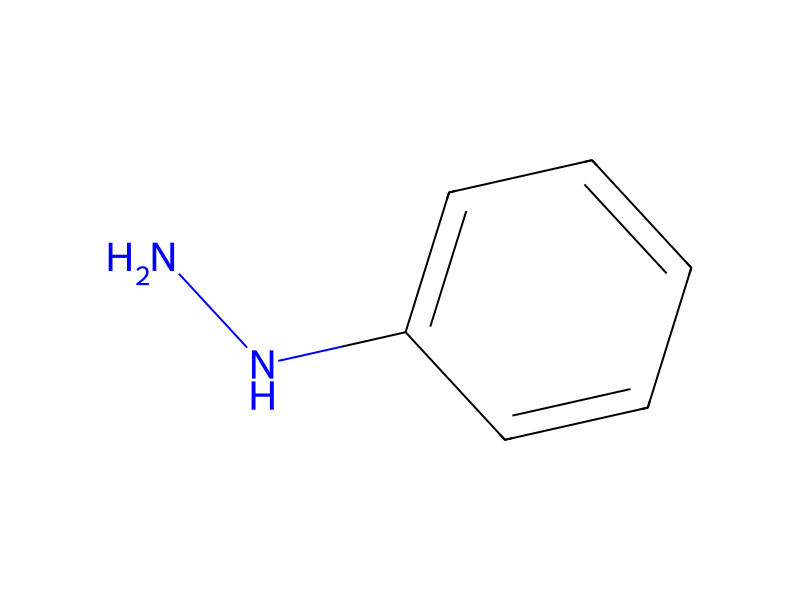
50 g (0.366 mole) ethyl chloro-oxoacetate (ethyl oxalate chloride, (4755-77-5) was added dropwise over 30 minutes into a solution of 39.5 g (0.365 mole) phenyl hydrazine and 50 ml triethylamine in 1000 ml tetrahydrofuran, under ice-cooling. After the dropwise addition, the mixture was stirred for 1 hour. Then the reaction mixture was poured into water and extracted with ethyl acetate, and the organic layer was successively washed with 10% aqueous citric acid, an aqueous sodium bicarbonate solution and a saline water, and then dried over anhydrous magnesium sulfate. The solvent was removed, and the resulting residue was crystallized from ether/hexane (1:1), collected by filtration and vacuum-dried. The resulting solid, 36 g, was dissolved in 600 ml 2-butanone, then 20.3 g (0.179 mole) chloroacetyl chloride was added thereto, followed by reacting at room temperature for 2 hours. Thereafter, the solution was heated under refluxed for further 8 hours. The reaction solution was cooled, poured into water and extracted wit ethyl acetate. The organic layer was washed with water and dried over anhydrous magnesium sulfate, and then the solvent was removed, to give an oil. It was crystallized from ethanol, to give the title compound (30 g, 0.12 mole, 33%).