Benzene → 2-Propenoic acid, 3-phenyl-, 2-naphthalenyl ester
Reaktionsgleichung

[CH:1]1[C:10]2[C:5](=[CH:6][CH:7]=[CH:8][CH:9]=2)[CH:4]=[CH:3][C:2]=1[OH:11].[OH-].[Na+].[C:14](Cl)(=[O:23])[CH:15]=[CH:16][C:17]1[CH:22]=[CH:21][CH:20]=[CH:19][CH:18]=1.C1C=CC=CC=1>CC(C)=O.O>[C:14]([O:11][C:2]1[CH:3]=[CH:4][C:5]2[C:10](=[CH:9][CH:8]=[CH:7][CH:6]=2)[CH:1]=1)(=[O:23])[CH:15]=[CH:16][C:17]1[CH:22]=[CH:21][CH:20]=[CH:19][CH:18]=1Komponenten
7
Edukt 4



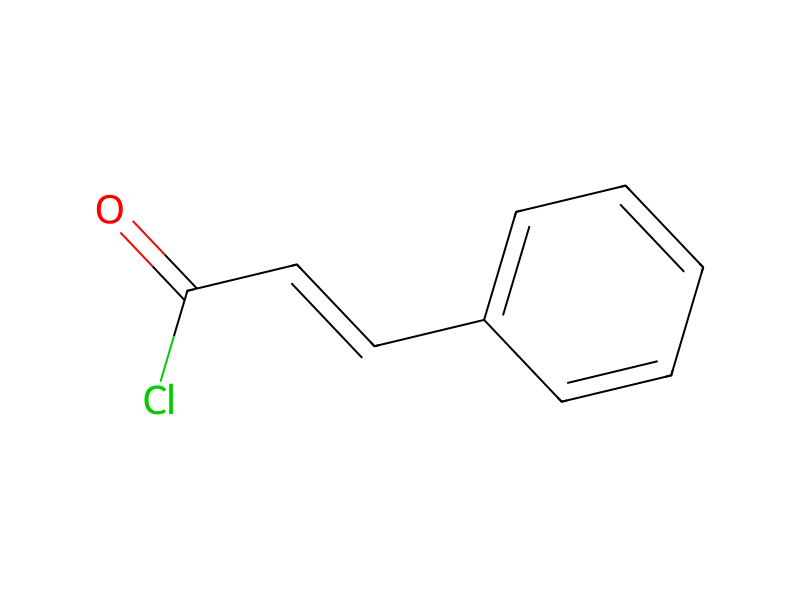
Produkt 1

Reagenzien, Katalysatoren, Lösungsmittel 2


Versuchsvorschrift
In 70 ml of acetone was dissolved 6.4 g of 2-naphthol. A 25% queous sodium hydroxide solution was added to the solution. A solution of 8.1 g of cinnamoyl chloride in 10 ml of acetone was dropwise added to the mixture over 4 minutes while stirring. After the stirring was continued for 7 minutes, benzene and water were added to the system to effect liquid separation. After the organic phase was washed with an aqueous hydrogen sodium carbonate solution, the system was dried over anhydrous potassium carbonate and the solvent was distilled off. The residue was treated with n-hexane and benzene to give crystals of the product. The product was recrystallized from a solvent mixture of n-hexane and benzene to give 9.8 g of the product.
Aufarbeitung
- customliquid separation
- washAfter the organic phase was washed with an aqueous hydrogen sodium carbonate solution
- dry with materialthe system was dried over anhydrous potassium carbonate
- distillationthe solvent was distilled off
- additionThe residue was treated with n-hexane and benzene
- customto give crystals of the product
- customThe product was recrystallized from a solvent mixture of n-hexane and benzene
Quellen und Nachweise
- ORD-Eintrag
- ord-00090178383f46be8306f997803f5ef6
- Quelldatensatz
- uspto-grants-1987_11
- Patentnummer
- US04707463
Notizen zur Reaktion
Wird geladen…