4-Methylmorpholine → t-butyloxycarbonyl-L-leucyl-L-prolinamide
Reaktionsgleichung

[C:1]([O:5][C:6]([NH:8][C@H:9]([C:17]([N:19]1[CH2:26][CH2:25][CH2:24][C@H:20]1[C:21]([NH2:23])=[O:22])=[O:18])[CH2:10][C:11]1[CH:16]=CC=C[CH:12]=1)=[O:7])([CH3:4])([CH3:3])[CH3:2].C(OC(N[C@H](C(O)=O)CC(C)C)=O)(C)(C)C.CN1CCOCC1.C(OC(Cl)=O)C(C)C.Cl.N1CCC[C@H]1C(N)=O>O1CCCC1.CN(C)C=O>[C:1]([O:5][C:6]([NH:8][C@H:9]([C:17]([N:19]1[CH2:26][CH2:25][CH2:24][C@H:20]1[C:21]([NH2:23])=[O:22])=[O:18])[CH2:10][CH:11]([CH3:16])[CH3:12])=[O:7])([CH3:3])([CH3:4])[CH3:2]Komponenten
8
Edukt 5


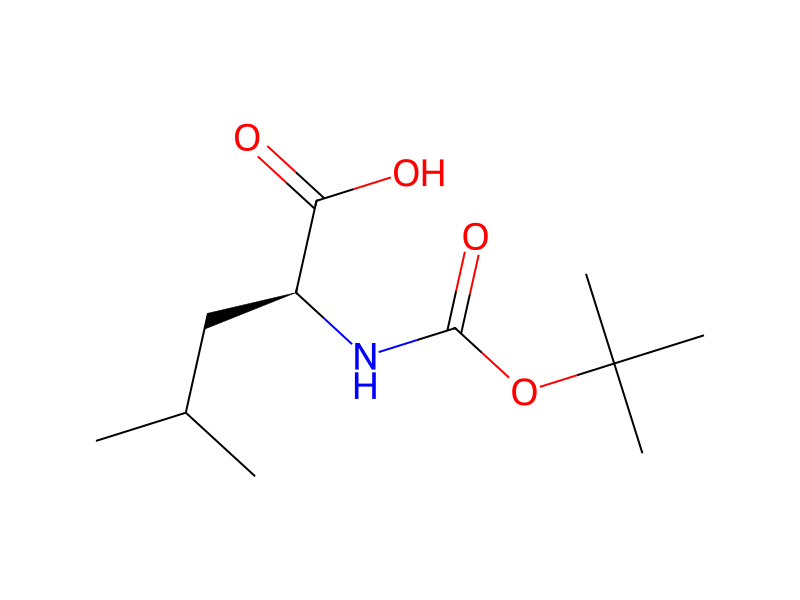


Produkt 1

Reagenzien, Katalysatoren, Lösungsmittel 2


Versuchsvorschrift
Following the general procedure described previously for t-butyloxycarbonyl-L-phenylalanyl-L-prolinamide, a solution of t-butyloxycarbonyl-L-leucine (32.64 g), in tetrahydrofuran was activated by treatment with N-methylmorpholine (18.22 ml), followed by isobutylchloroformate (16.99 ml) at -5° C. After 15 minutes, L-prolinamide hydrochloride (15.0 g) was added as a solution in dimethylformamide, followed by N-methylmorpholine (18.22 ml) and the mixture stirred overnight at room temperature. The reaction was worked up as described previously to give the desired product, which was used for the next step without further purification.
Quellen und Nachweise
- ORD-Eintrag
- ord-dab328d83a3549958a7c86af4668c86e
- Quelldatensatz
- uspto-grants-1993_05
- Patentnummer
- US05212158
Notizen zur Reaktion
Wird geladen…