Lithium hydroxide, monohydrate → lithium (S)-2-(3-methylmorpholino)benzoxazole-4-carboxylate
HRID 249848
Reaktionsgleichung

[CH3:1][C@@H:2]1[N:7]([C:8]2[O:9][C:10]3[C:11](=[C:13]([C:17]([O:19]C)=[O:18])[CH:14]=[CH:15][CH:16]=3)[N:12]=2)[CH2:6][CH2:5][O:4][CH2:3]1.O.[OH-].[Li+:23]>O1CCOCC1.CO.O>[CH3:1][C@@H:2]1[N:7]([C:8]2[O:9][C:10]3[C:11](=[C:13]([C:17]([O-:19])=[O:18])[CH:14]=[CH:15][CH:16]=3)[N:12]=2)[CH2:6][CH2:5][O:4][CH2:3]1.[Li+:23]Komponenten
4
Edukt 2
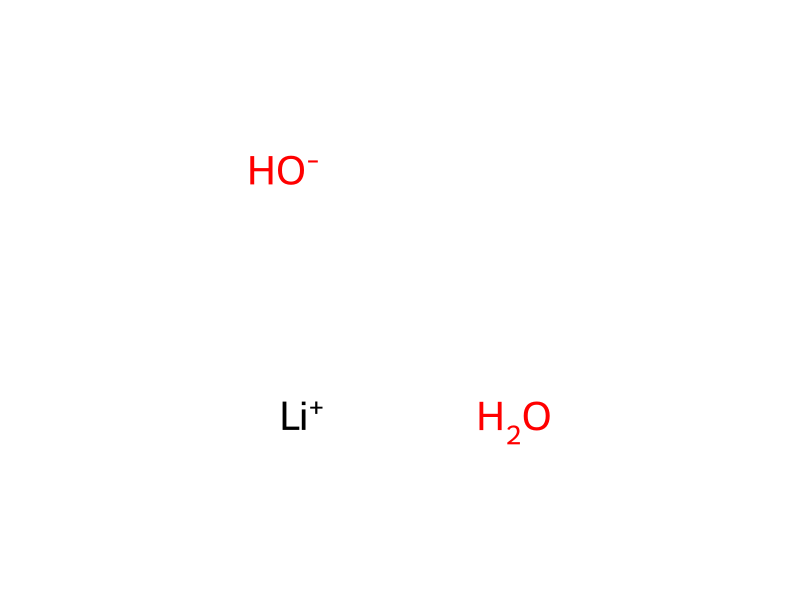

Produkt 1

Reagenzien, Katalysatoren, Lösungsmittel 1

Versuchsvorschrift
A solution of (S)-methyl 2-(3-methylmorpholino)benzoxazole-4-carboxylate (0.58 g, 2.1 mmol) in 1,4-dioxane/CH3OH/H2O (2:2:1, 8.5 mL) containing lithium hydroxide monohydrate (150 mg, 6.30 mmol) was stirred at room temperature 24 h. The reaction mixture was concentrated under reduced pressure and residual H2O was azeotropically removed with benzene (2×100 mL) to yield lithium (S)-2-(3-methylmorpholino)benzoxazole-4-carboxylate as a white solid which was used in the next step without further isolation or purification.