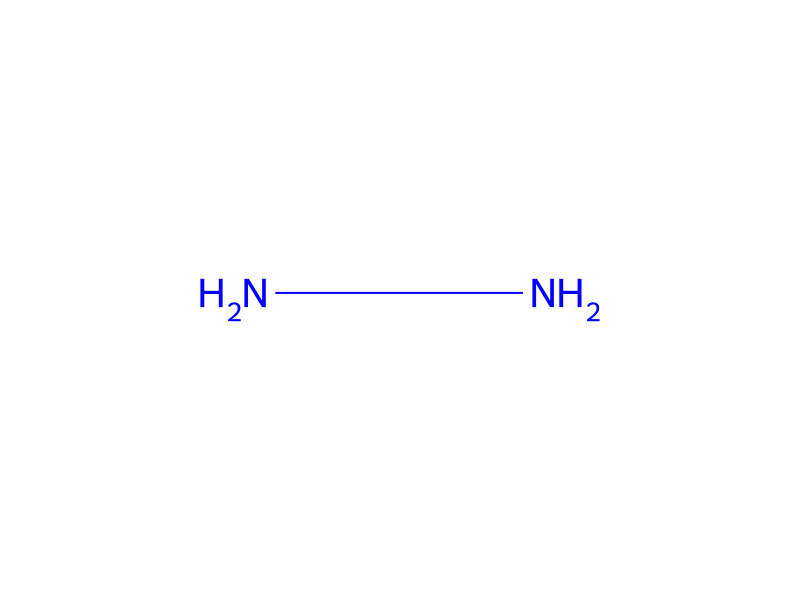
A mixture of the compound of formula (Df), 3-chloro-6,7-dihydro-5H-benzo[6,7]cyclohepta[1,2-c]pyridazine, (4.3 g, 18.6 mmol) and anhydrous hydrazine (11.7 mL, 370 mmol) in 45 mL of ethanol was refluxed for 16 h. After cooling to ambient temperature, 5 mL of water was added and the volatiles were then evaporated. To the solid residue was added cold water (about 80 mL). After sonication for 10 min, the resulting solid was collected by filtration and washed with cold water three times. After freeze-drying, the compound of formula (D-1), 3-hydrazino-6,7-dihydro-5H-benzo[6,7]cyclohepta[1,2-c]pyridazine, (4.14 g, 98%) was obtained as a slight yellow solid, 1H NMR (300 MHz, CD3OD) δ: 7.59 (m, 1H), 7.39-7.26 (m, 3H), 7.04 (s, 1H), 2.54 (t, J=6.9 Hz, 2H), 2.47 (t, J=6.9 Hz, 2H), 2.18 (quant, J=6.9 Hz, 2H); LC-MS: purity: 100%; MS (m/e): 227 (MH+).