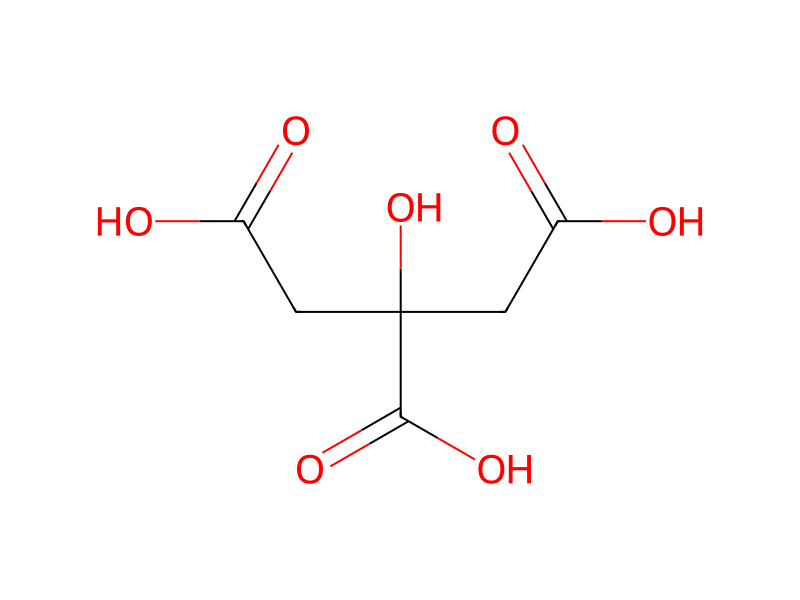
Citric Acid → gamma-Carboxyglutamic acid
Reaktionsgleichung

COC1C=CC2[N:12]=CC=C([C@@H](O)[C@H]3N4C[C@H](C=C)[C@@H](CC4)C3)C=2C=1.[C:25]([OH:37])(=[O:36])[CH2:26][C:27]([CH2:32][C:33]([OH:35])=[O:34])(C(O)=O)O.[C:38]([O:41]CC)(=[O:40])C>>[C:38]([CH:32]([C:33]([OH:35])=[O:34])[CH2:27][C@@H:26]([C:25]([OH:37])=[O:36])[NH2:12])([OH:41])=[O:40]Komponenten



Versuchsvorschrift
The quinine salt of the optically active isomer (II) obtained in the above Example 1 (46.8 mg) was suspended in ethyl acetate and desalted with 1N citric acid. The organic layer was washed with saturated aqueous sodium chloride and dried. Evaporation of ethyl acetate under reduced pressure gave 27.5 mg of a free γ-carboxyglutamic acid derivative (hereinafter called sample (a)). Its whole amount was dissolved in 2.8 ml of dichloromethane and to the resultant solution were added 14.2 mg of 2-chloro-1-methylpyridinium, 8.2 μl of R-(+)-1-(α-naphthyl)ethylamine and 26.6 μl of n-butylamine, and the reaction was carried out at 40° C. for 2 hours. After completion of the reaction diastereomer fractions formed by thin layer chromatography were separated. The fractions were eluted with ethyl acetate, and then the residue obtained by evaporation under reduced pressure was analyzed by high performance liquid chromatography under the following conditions.
Aufarbeitung
- washThe organic layer was washed with saturated aqueous sodium chloride
- customdried
- customEvaporation of ethyl acetate under reduced pressure
Quellen und Nachweise
- ORD-Eintrag
- ord-bdd5d8a4ae9a4a6097ec846e2b9d7800
- Quelldatensatz
- uspto-grants-1993_11
- Patentnummer
- US05258545
Notizen zur Reaktion
Wird geladen…