Reaktionsgleichung

[NH2:1]/[C:2](/[CH3:19])=[C:3](/[C:9](=[O:18])[NH:10][C:11]1[CH:16]=[CH:15][C:14]([Cl:17])=[CH:13][CH:12]=1)\[C:4]([O:6][CH2:7][CH3:8])=[O:5].[CH:20](OCC)(OCC)OCC.C(OC(=O)C)(=O)C>>[Cl:17][C:14]1[CH:13]=[CH:12][C:11]([N:10]2[C:9](=[O:18])[C:3]([C:4]([O:6][CH2:7][CH3:8])=[O:5])=[C:2]([CH3:19])[N:1]=[CH:20]2)=[CH:16][CH:15]=1Komponenten
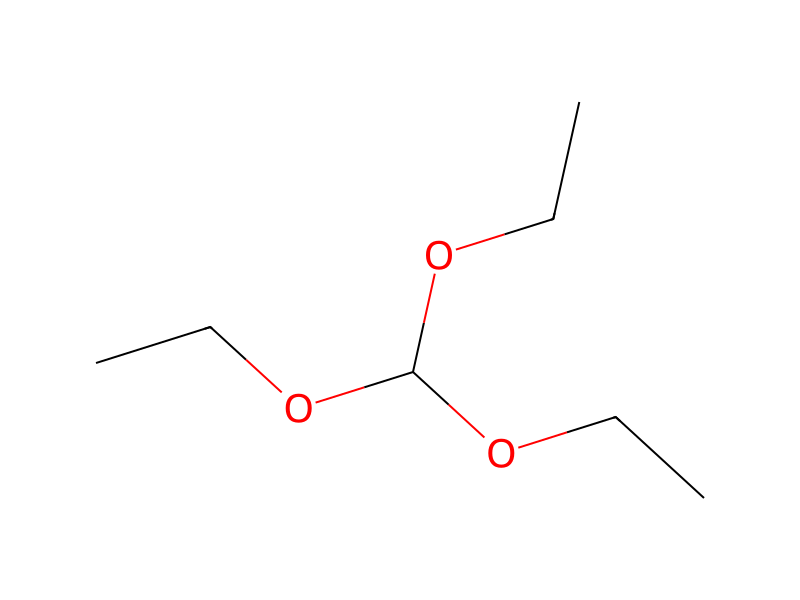
4



Versuchsvorschrift
To a 2-l. three-necked flask are charged 250 g (0.88 mole) of ethyl 3-amino-2-(4-chlorophenylcarbamoyl)crotonate, 523 g. (3.54 moles) of triethyl orthoformate and 135 g (1.32 moles) of acetic anhydride. While stirring, reflux is initiated causing all solid to dissolve. After 15 to 16 hours at reflux, lower boiling liquid is distilled off (up to a head temperature of 90°-95° C.) and the dark reaction solution is subjected to rotary evaporation. Addition of the viscous residue to 4 l. of hot hexane with continued heating and agitation effects solidification. There is obtained 225 g (87%) of ethyl 1-(4-chlorophenyl)-1,6-dihydro-4-methyl-6-oxopyrimidine-5-carboxylate as a brown solid, m.p. 98°-100° C.
Aufarbeitung
- temperaturereflux
- dissolutionto dissolve
- temperatureAfter 15 to 16 hours at reflux
- distillationlower boiling liquid is distilled off (up to a head temperature of 90°-95° C.) and the dark reaction solution
- customis subjected to rotary evaporation
- additionAddition of the viscous residue to 4 l
- temperatureof hot hexane with continued heating
Quellen und Nachweise
- ORD-Eintrag
- ord-2b433d534e8642acb8acf48992a329a9
- Quelldatensatz
- uspto-grants-1979_04
- Patentnummer
- US04147528
Verknüpfte Notizen
Wird geladen…