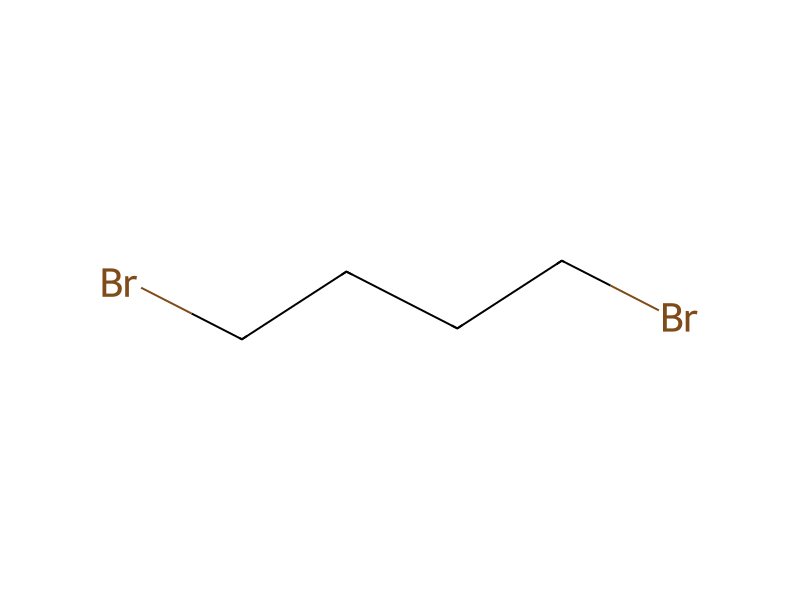
[C:1]12([O:11][C:12]3[CH:18]=[CH:17][C:15]([NH2:16])=[C:14]([F:19])[CH:13]=3)[CH2:10][CH:5]3[CH2:6][CH:7]([CH2:9][CH:3]([CH2:4]3)[CH2:2]1)[CH2:8]2.Br[CH2:21][CH2:22][CH2:23][CH2:24]Br.C([O-])([O-])=O.[K+].[K+]>C(O)C>[C:1]12([O:11][C:12]3[CH:18]=[CH:17][C:15]([N:16]4[CH2:24][CH2:23][CH2:22][CH2:21]4)=[C:14]([F:19])[CH:13]=3)[CH2:2][CH:3]3[CH2:4][CH:5]([CH2:6][CH:7]([CH2:9]3)[CH2:8]1)[CH2:10]2A mixture of 2.3 g (8.8 mmoles) of 4-(1-adamantyloxy)-2-fluoroaniline, 1.90 g (8.80 mmoles) of 1,4-dibromobutane, and 2.68 g (19.4 mmoles) of K2CO3 in deaerated absolute ethanol (25 ml) is refluxed for twenty-four hours. The solvent is evaporated, and the residue taken up in methylene chloride (125 ml) and water (125 ml). The methylene chloride layer is washed with 2×125 ml of water, and the combined aqueous portions are extracted with methylene chloride (50 ml). The combined methylene chloride layers are dried and concentrated. The crude product is chromatographed by high pressure liquid chromatography on a 2.54 × 109 cm column at approximately 40 psi, eluting with 0.5% acetone in methylene chloride and collecting 200 ml fractions. Fraction 3 contains 1.5 g of tan solid, m.p. 99.0°-105.9° C.