Reaktionsgleichung

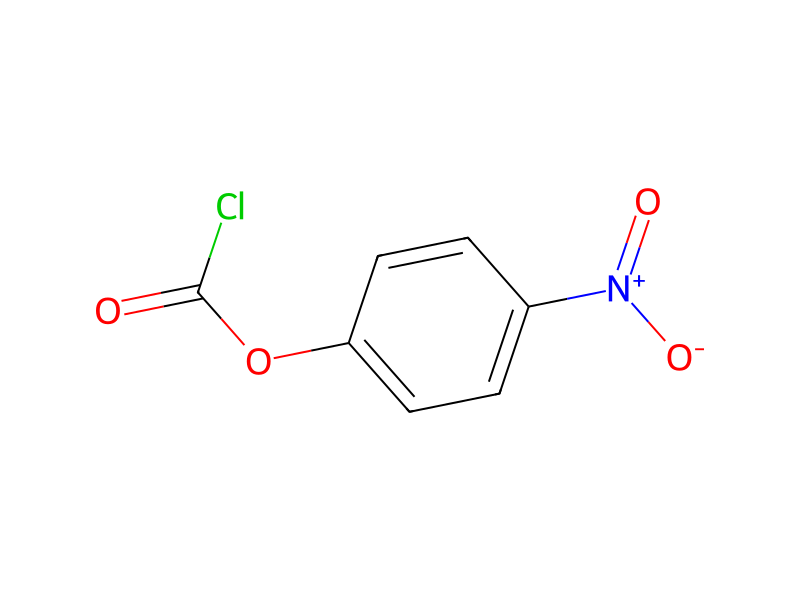
[N+:1]([C:4]1[CH:13]=[CH:12][C:7]([O:8][C:9](Cl)=[O:10])=[CH:6][CH:5]=1)([O-:3])=[O:2].[Si:14]([O:21][CH2:22][CH2:23][CH2:24][OH:25])([C:17]([CH3:20])([CH3:19])[CH3:18])([CH3:16])[CH3:15].CN1CCOCC1>C(Cl)Cl>[Si:14]([O:21][CH2:22][CH2:23][CH2:24][O:25][C:9]([O:8][C:7]1[CH:6]=[CH:5][C:4]([N+:1]([O-:3])=[O:2])=[CH:13][CH:12]=1)=[O:10])([C:17]([CH3:19])([CH3:20])[CH3:18])([CH3:16])[CH3:15]Komponenten
5




Versuchsvorschrift
A 0.604 g (3.00 mmol) sample of p-nitrophenoxycarbonylchloride in 3 mL of methylene chloride was added to a solution of 0.570 g (3.00 mmol) of 3-(t-butyldimethylsilyloxy)-1-propanol and 0.329 mL of 4-methylmorpholine in 2 mL of methylene chloride cooled in an ice bath. The solution was stirred for 2 hours. The mixture was diluted with methylene chloride, which was washed with water, dried and concentrated. The crude product was chromatographed on silica gel, eluting with 10% ethyl acetate in hexane. The solvent was removed and the product dried to afford 0.831 g of the title compound, which was taken directly to the next step.
Aufarbeitung
- temperaturecooled in an ice bath
- washwas washed with water
- customdried
- concentrationconcentrated
- customThe crude product was chromatographed on silica gel
- washeluting with 10% ethyl acetate in hexane
- customThe solvent was removed
- customthe product dried
Quellen und Nachweise
- ORD-Eintrag
- ord-3e4c93071aff4276815f2f672c60d08e
- Quelldatensatz
- uspto-grants-1997_07
- Patentnummer
- US05648497
Verknüpfte Notizen
Wird geladen…