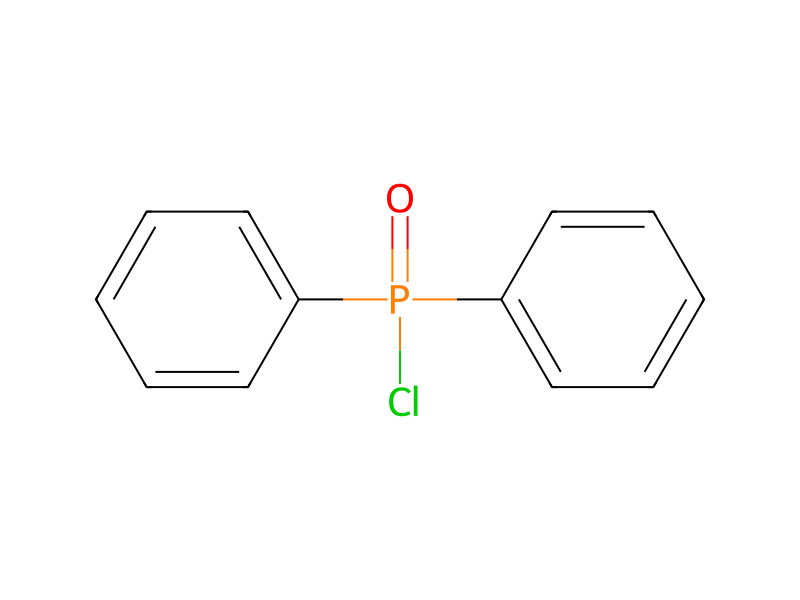
A dry 250 mL 3-necked round bottom flask, fitted with a magnetic stir bar, addition funnel and thermometer, was charged with benzaldehyde oxime (38 mmol) dissolved in petroleum ether (40 mL) and methylene chloride (40 mL) along with triethylamine (38 mmol). The flask was cooled, under an atmosphere of nitrogen, to -50° C. with a Dry Ice-chloroform bath. The addition funnel was charged with diphenylphosphinyl chloride (37 mmol) dissolved in methylene chloride (10 mL) and this solution was slowly dropped into the flask ensuring that the reaction temperature did not rise above -25° C. White precipitate formation was observed. Once the addition was complete the reaction temperature was naturally allowed to rise to room temperature over a period of 2 hours. The reaction mixture was filtered to remove the precipitate and the filtrate was concentrated by rotary evaporation which yielded a yellow oil which solidified upon standing. The structure of the product is detailed below. ##STR8##