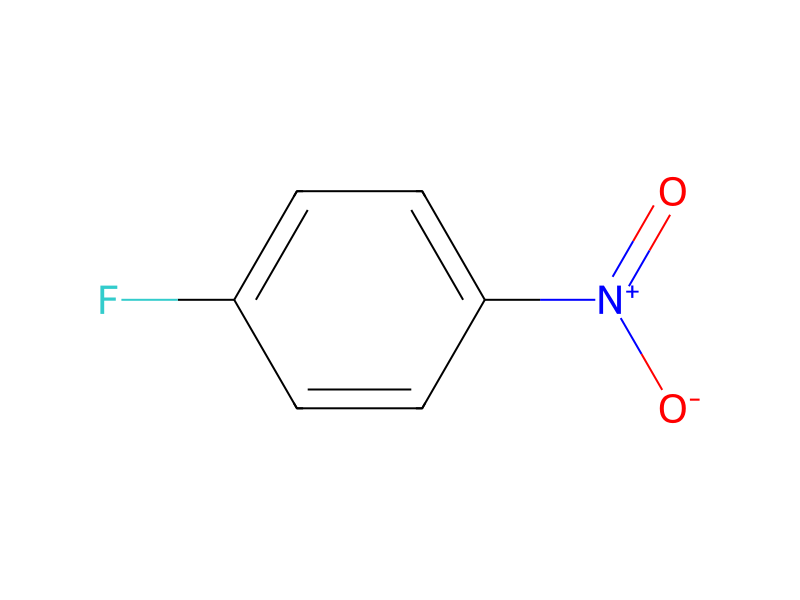
[F:1][C:2]1[CH:7]=[CH:6][C:5]([N+:8]([O-:10])=O)=[CH:4][CH:3]=1.NN.FC1C=CC(NO)=CC=1.[F:22][C:23]([N:26]=[C:27]=[O:28])([F:25])[F:24]>O1CCCC1.[Pd]>[F:22][C:23]([F:25])([F:24])[NH:26][C:27]([N:8]([C:5]1[CH:6]=[CH:7][C:2]([F:1])=[CH:3][CH:4]=1)[OH:10])=[O:28]p-Fluoronitrobenzene (14.1 grams; 0.1 mol) is dissolved in tetrahydrofuran (100 ml). Ten percent palladium on charcoal catalyst (0.1 gram) is added to the solution followed by hydrazine (6.0 ml; 0.1 mol), and the resulting mixture stirred at room temperature for about 48 hours with cooling as necessary. The reaction mixture, containing N-(4-fluorophenyl)hydroxylamine, is dried over anhydrous magnesium sulfate and filtered. To this solution is added trifluoromethyl isocyanate (11.1 grams; 0.1 mol) and the solution is stirred for about 15 minutes. The reaction mixture is concentrated by evaporation of solvent and the resulting precipitate is recovered by filtration to yield 1-trifluoromethyl-3-(4'-fluorophenyl)-3-hydroxyurea.