StartseiteMCPWorkbenchSkills
StartseiteWorkbenchBenachrichtigungenMein Bereich
llms.txt · MCP-AnleitungDatenschutz · Nutzungsbedingungen · Supportv1.8.3
  1. Startseite
  2. /Reaktion

Isopropylamine → 1,3,5-Triazin-2-amine, 4,6-dichloro-N-(1-methylethyl)-

HRID 27222
Drucken

Reaktionsgleichung

Reaktionsgleichung von HRID 27222
[N:1]1[C:8]([Cl:9])=[N:7][C:5](Cl)=[N:4][C:2]=1[Cl:3].[CH:10]([NH2:13])([CH3:12])[CH3:11].[OH-].[Na+]>C(OCC)(=O)C>[Cl:9][C:8]1[N:1]=[C:2]([Cl:3])[N:4]=[C:5]([NH:13][CH:10]([CH3:12])[CH3:11])[N:7]=1
KomponentenReaktionsbedingungenVersuchsvorschriftAufarbeitungQuellen und NachweiseNotizen zur Reaktion

Komponenten

5

Edukt 3

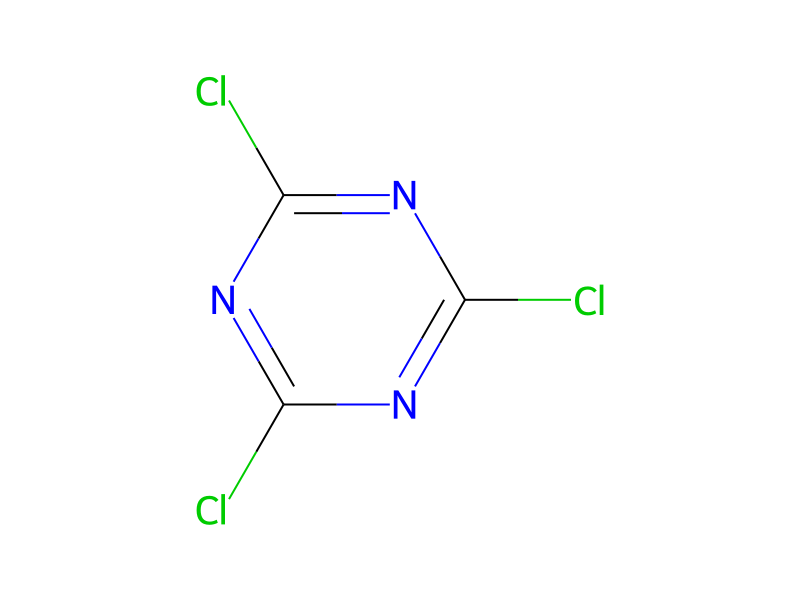
HCID 6363IsopropylamineHCID 7954Cyanuric chlorideHCID 14798Sodium Hydroxide

Produkt 1

HCID 194531,3,5-Triazin-2-amine, 4,6-dichloro-N-(1-methylethyl)-

Reagenzien, Katalysatoren, Lösungsmittel 1

HCID 8857Ethyl AcetateLösungsmittel

Reaktionsbedingungen

Temperatur
-15 °C

Versuchsvorschrift

A suspension of 369 g of cyanuric chloride in 1000 ml of ethyl acetate is cooled to -15° C. With good stirring, 124 g of isopropylamine are first added dropwise at -20° C. to -10° C. in the course of 21/2 hours, followed by 267 g of a 30% aqueous solution of sodium hydroxide in the course of one hour. The reaction mixture is stirred for a further 11/2 hours at the same temperature, then the organic phase is separated, washed with two 100 ml portions of water and dried over sodium sulphate. The solvent is evaporated, to yield an oil from which the 2,4-dichloro-6-isopropylamino-s-triazine precipitates in crystalline form after stirring with petroleum ether at low temperature. Melting point: 46°-47° C.

Aufarbeitung

  1. customthe organic phase is separated
  2. washwashed with two 100 ml portions of water
  3. dry with materialdried over sodium sulphate
  4. customThe solvent is evaporated

Quellen und Nachweise

ORD-Eintrag
ord-32cef9d776e644fa9ed2f82788d54e0e
Quelldatensatz
uspto-grants-1980_09
DOI
10.6084/m9.figshare.5104873.v1
Patentnummer
US04220770

Notizen zur Reaktion

Auf dieser SeiteKomponentenReaktionsbedingungenVersuchsvorschriftAufarbeitungQuellen und NachweiseNotizen zur Reaktion