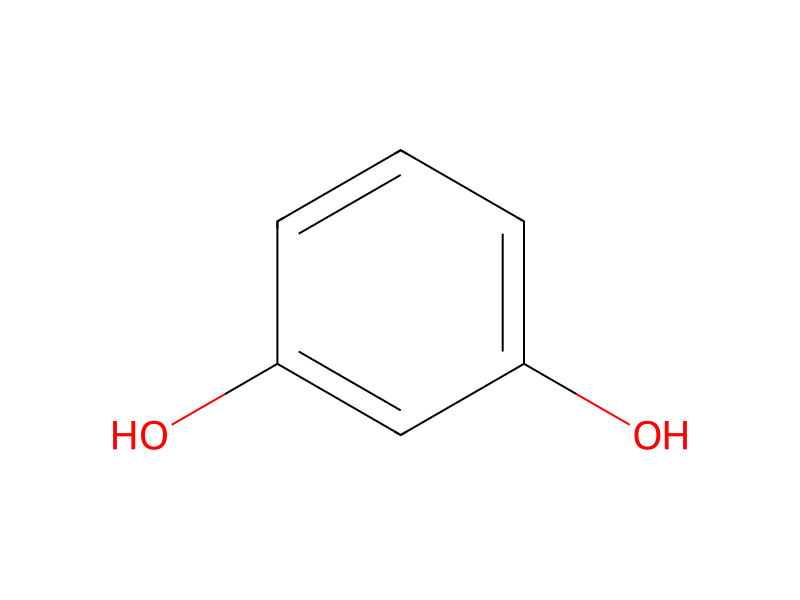
Resorcinol (176.2 g, 1.60 moles), dimethylacetamide (DMAC) (550 mL), toluene (75 mL), potassium carbonate (55.2 g, 0.40 moles), 4-bromobenzocyclobutene (73.2 g, 0.40 moles), and cuprous chloride (3.96 g, 0.040 moles) are placed in a 1000 mL 3-necked flask. The flask is equipped with a water separating trap, reflux condenser, nitrogen inlet, and thermometer. The system is purged with nitrogen. The mixture is then heated to reflux, and water and toluene are collected in the trap. Toluene (about 25 mL) is distilled out of the reaction mixture and removed from the trap, until the temperature in the flask reaches 153° C. A sample, removed from the reaction after 5 hours of reflux and analyzed by gas chromatography (GC), shows little bromobenzocyclobutene remaining. The reaction is allowed to cool to room temperature after 6 hours of reflux. During the reaction, the temperature in the flask rises slightly to 156° C. by the end of the reaction.