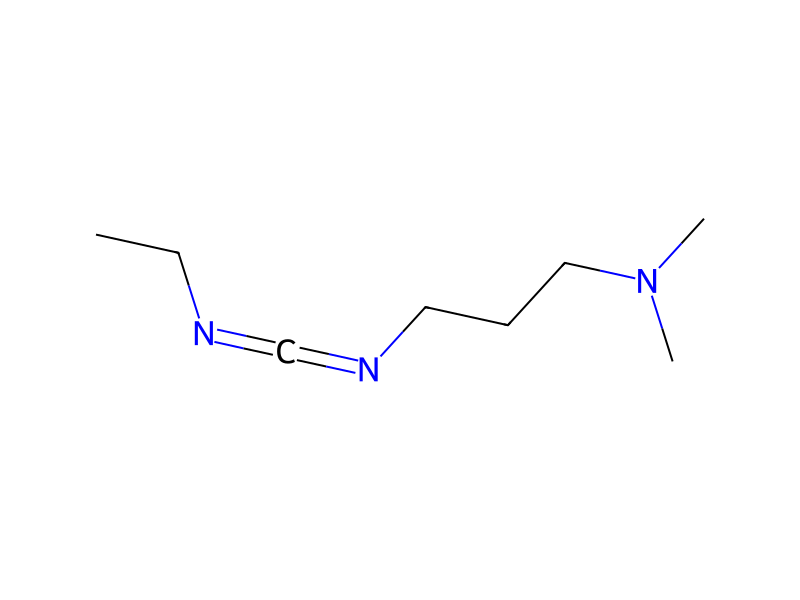
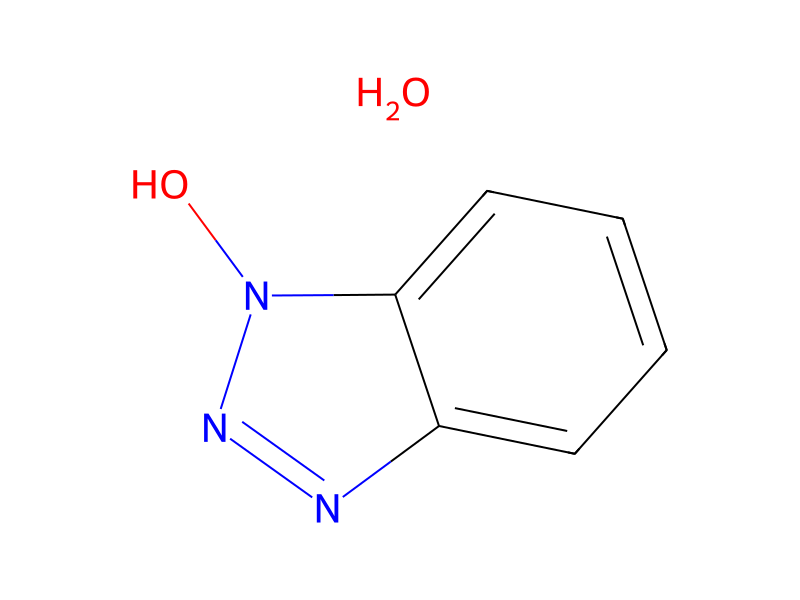
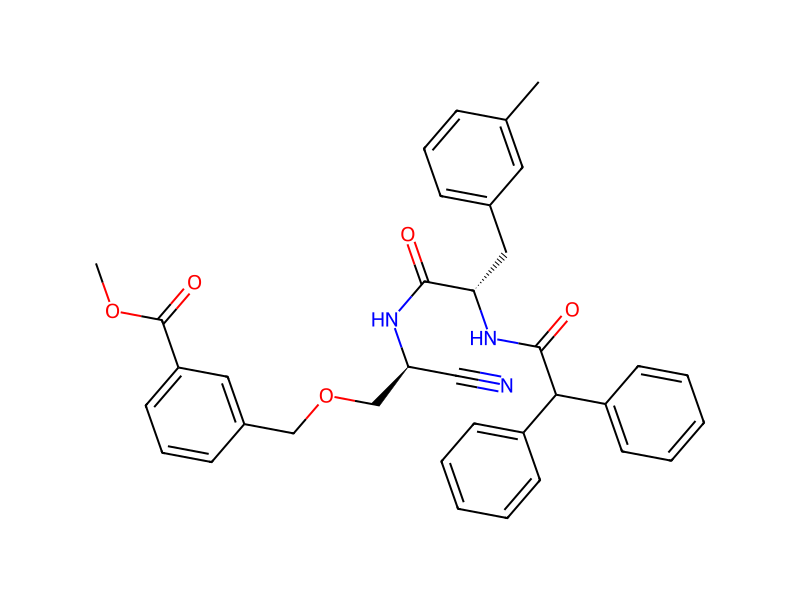
To a solution of 3-methyl-N-(2,2-diphenylacetyl-L-phenylalanine (see example 302, 1.0 g, 2.68 mmol), 1-hydroxybenzotriazole hydrate (0.41 g, 2.68 mmol) and N-methylmorpholine (0.74 mL, 6.69 mmol) in CH2Cl2 (80 mL) is added 1-(3-dimethylaminopropyl)-3-ethylcarbodiimide.HCl (0.77 g, 4.02 mmol) in one portion. After stirring 30 minutes at room temperature, S-trityl-L-cysteinamide (0.97 g, 2.68 mmol) is added to the solution in one portion, and the solution is stirred for 16 hours. The solution is evaporated, and the residue partitioned between water (80 mL) and ethyl acetate (80 mL). The aqueous layer is washed with EtOAc (2×80 mL), and the combined organic layers are then washed with 1 N HCl (100 mL), saturated aqueous NaHCO3 (1×50 mL), water (1×50 mL) and brine (1×50 mL), dried over MgSO4, and evaporated. The residue is triturated with Et2O/hexane (1:1) to yield N-[3-methyl-N-(2,2-diphenylacetyl)-L-phenylalanyl]-S-trityl-L-cysteinamide as a white solid.