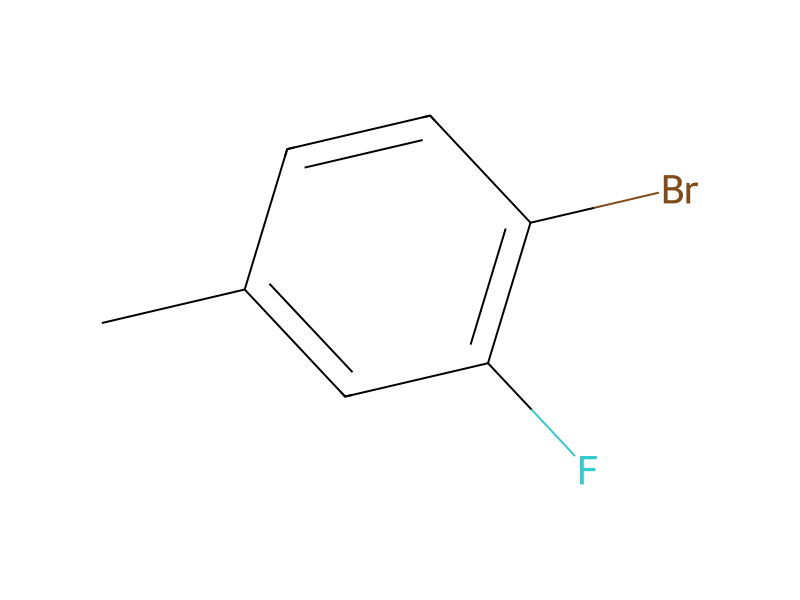
To a 500 mL three-necked round-bottomed flask equipped with septum and N2 inlet were added 10.0 g (52.9 mmol) 4-bromo-3-fluorotoluene and 100 mL dry tetrahydrofuran. The solution was cooled to −70° C., and 25.4 mL (63.5 mmol) of a 2.5 M solution of butyl lithium in hexane was added slowly so the temperature did not exceed −60° C. The clear solution was stirred at −70° C. for 1 hour, then treated with 10.8 mL (63.5 mmol) triethylborate. The reaction was stirred for 2 hours at −70° C., then warmed to room temperature and stirred for 16 hours. The reaction was quenched with saturated aqueous ammonium chloride solution, adjusted to pH 1-2 with 1 N hydrochloric acid, and extracted with ethyl acetate. The organic layer was washed with brine, dried over sodium sulfate, and evaporated. The residue was triturated with hexane to a white solid, 6.1 g (75%), as a mixture of monoaryl and diaryl boronic acids.