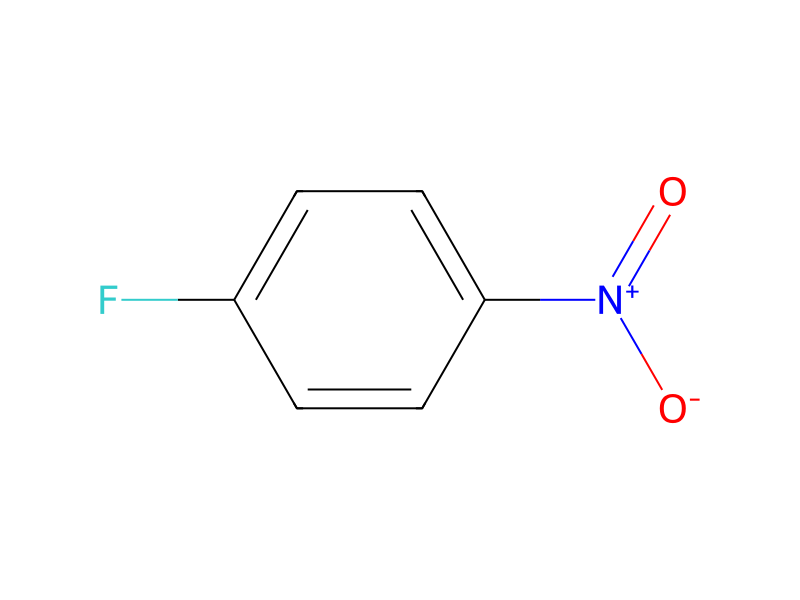
F[C:2]1[CH:7]=[CH:6][C:5]([N+:8]([O-:10])=[O:9])=[CH:4][CH:3]=1.[F:11][C:12]([F:30])([CH:27]([F:29])[F:28])[CH2:13][O:14][C:15]1[CH:20]=[CH:19][C:18]([N:21]2[CH:25]=[N:24][NH:23][C:22]2=[O:26])=[CH:17][CH:16]=1.C(=O)([O-])[O-].[K+].[K+].Cl>C(OCC)(=O)C.O.CN(C)C=O>[N+:8]([C:5]1[CH:6]=[CH:7][C:2]([N:23]2[C:22](=[O:26])[N:21]([C:18]3[CH:17]=[CH:16][C:15]([O:14][CH2:13][C:12]([F:11])([F:30])[CH:27]([F:28])[F:29])=[CH:20][CH:19]=3)[CH:25]=[N:24]2)=[CH:3][CH:4]=1)([O-:10])=[O:9]A mixture of 4-fluoronitrobenzene (3.1 g), 4-[4-(2,2,3,3-tetrafluoropropoxy)phenyl]-3(2H,4H)-1,2,4-triazolone (5.8 g), potassium carbonate (13.8 g) and N,N-dimethylformamide (60 ml) was stirred at 80° C. for 2 hours. The resultant was cooled and poured into water (500 ml). The mixture was neutralized with hydrochloric acid and the precipitated crystals were collected by filtration. The crystals thus obtained were dissolved in ethyl acetate (300 ml) and dried over anhydrous magnesium sulfate. After filtration, the filtrate was concentrated under reduced pressure. The residue was crystallized from a mixture of ethyl acetate and diisopropyl ether to give 2-(4-nitrophenyl)-4-[4-(2,2,3,3-tetrafluoropropoxy)phenyl]-3(2H,4H)-1,2,4-triazolone (5.5 g, 67%) as yellow crystalline powders.