Reaktionsgleichung

[C:1]([O:5][CH2:6][CH2:7][O:8][C:9](=[O:12])[CH:10]=[CH2:11])(=[O:4])[CH:2]=[CH2:3].[C:13]([O:17][CH2:18][CH:19]=C)(=[O:16])[CH:14]=[CH2:15].C=C.C(OCC)(=O)C=C.[C:30]1(=[O:36])[O:35][C:33](=[O:34])[CH:32]=[CH:31]1>>[CH2:1]=[CH2:2].[C:13]([O:17][CH2:18][CH3:19])(=[O:16])[CH:14]=[CH2:15].[C:1]([O:5][CH2:6][CH2:7][O:8][C:9](=[O:12])[CH:10]=[CH2:11])(=[O:4])[CH:2]=[CH2:3].[C:33]1(=[O:34])[O:35][C:30](=[O:36])[CH:31]=[CH:32]1Komponenten
6





Versuchsvorschrift
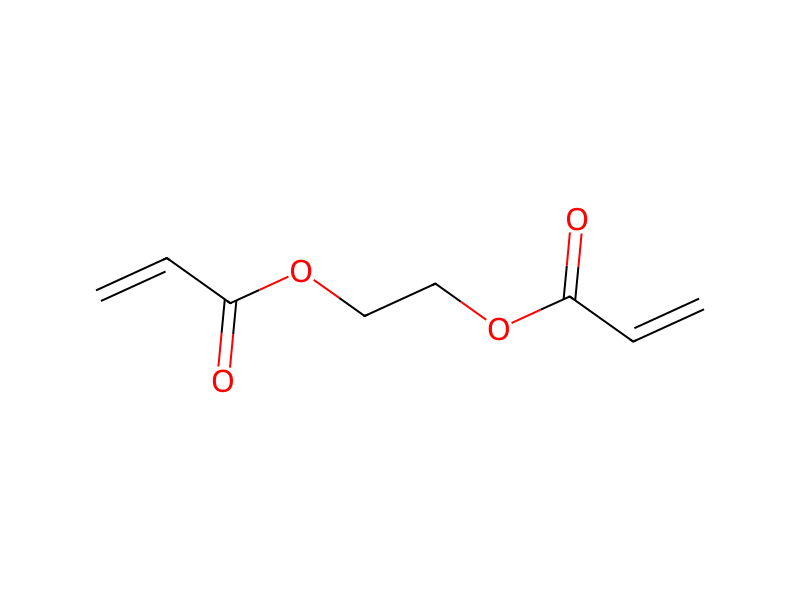
The procedure of D(1) above, was repeated except that 1.2 grams of ethylene diacrylate were used in place of the allyl acrylate. Yield: 479 grams. The branched tetrapolymer obtained had about 50 mole percent of ethylene units. The polymer chain consisted principally of units -(E)-(B')-, where E is ethylene and B' is randomly selected from ethyl acrylate, ethylene diacrylate, and maleic anhydride (3.8 weight percent).
Aufarbeitung
- customThe branched tetrapolymer obtained
Quellen und Nachweise
- ORD-Eintrag
- ord-ba1ca4c61eb1457a9d64e45728daff2e
- Quelldatensatz
- uspto-grants-1980_09
- Patentnummer
- US04225476
Verknüpfte Notizen
Wird geladen…