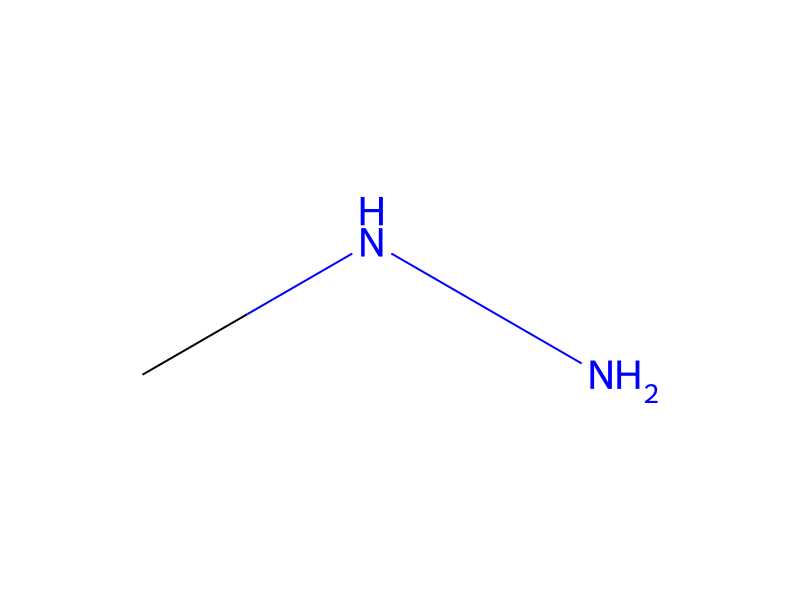
4-Acetylbenzoic acid (5.00 gram, 30.5 mmol) and 3.19 gram of glyoxalic acid monohydrate (34.7 mmol, 1.14 eq.) were stirred in 50 mL of acetic acid at 110° C. for 20 hours, and then cooled to 40° C. Solvent was removed with evaporator in vacuo. To the residue was added water (15 mL), and the mixture cooled with an ice bath. The resulting solution was titrated with ammonia solution until pH 9. Methyl hydrazine (3.00 mL 57.3 mmol, 1.88 eq.) was added, and the mixture was heated to reflux for 5 hours. The solution was concentrated in vacuo. To the solid residue was added 1 M cold aqueous hydrochloric acid until the solution had a pH 1˜2. The solid was filtrated and dried in vacuo over night. The solids were treated with diethyl ether (200 mL) and the mixture was ultrasonicated at room temperature for 3 hours and filtered. The solids were treated with 200 mL of diethyl ether and stirred for 2 hours before filtration, which after drying gave 4-(1-methyl-6-oxo-1,6-dihydro-pyridazin-3-yl)-benzoic acid in 33% isolated yield.