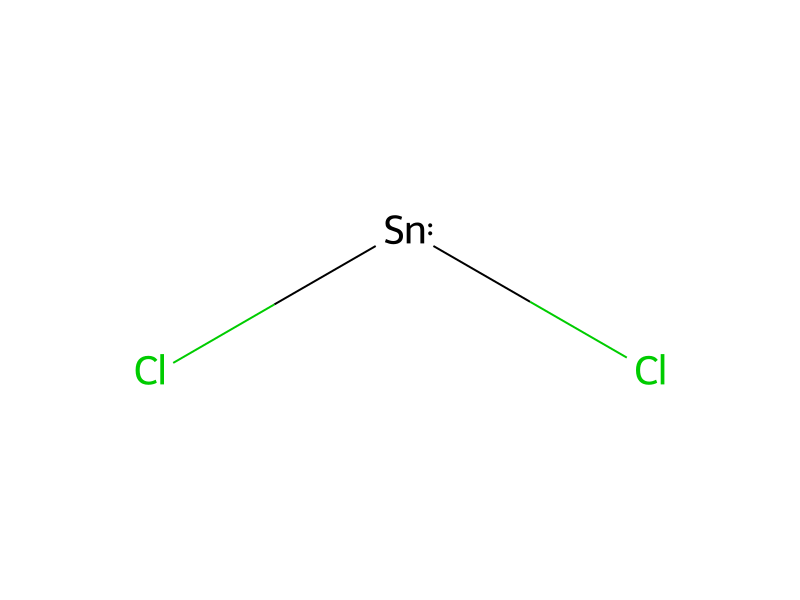
[Cl:1][C:2]1[CH:3]=[CH:4][C:5]([O:25][CH3:26])=[C:6]([C:8]2[N:13]=[C:12]([NH2:14])[N:11]=[C:10]([NH:15][C:16]3[CH:21]=[CH:20][C:19]([N+:22]([O-])=O)=[CH:18][CH:17]=3)[CH:9]=2)[CH:7]=1.[Sn](Cl)Cl.Cl>CO>[NH2:22][C:19]1[CH:20]=[CH:21][C:16]([NH:15][C:10]2[CH:9]=[C:8]([C:6]3[CH:7]=[C:2]([Cl:1])[CH:3]=[CH:4][C:5]=3[O:25][CH3:26])[N:13]=[C:12]([NH2:14])[N:11]=2)=[CH:17][CH:18]=1A mixture of the title compound of Example 11 (0.060 g, 0.16 mmol) and tin (II) chloride (0.19 g, 1.0 mmol) in a solution of 1.0 M hydrochloric acid and methanol (1:10, 15 ml) was heated under reflux for 2 hours. After evaporation of volatiles under reduced pressure, the residue was treated with aqueous sodium hydroxide solution (1.0 M, 10 ml) and stirred for 15 minutes. Filtration provided the title compound (0.035 g, 64% yield) as a white powder. 1H NMR (DMSO-d6) δ 3.84 (s, 3H, CH3), 4.83 (s, 2H, NH2), 6.08 (s, 2H, NH2), 6.54 (d, 2H, J=8.7 Hz, Ar), 6.58 (s, 1H, Ar), 7.13 (d, 1H, J=8.9 Hz, Ar), 7.25 (d, 2H, J=8.7 Hz, Ar), 7.41 (dd, 1H, J=8.9 Hz, J-2.8 Hz, Ar), 7.89 (d, 1H, J=2.8 Hz, Ar), 8.67 (s, 1H, NH).