StartseiteMCPWorkbenchSkills
StartseiteWorkbenchBenachrichtigungenMein Bereich
llms.txt · MCP-AnleitungDatenschutz · Nutzungsbedingungen · Supportv1.8.0
  1. Startseite
  2. /Reaktion

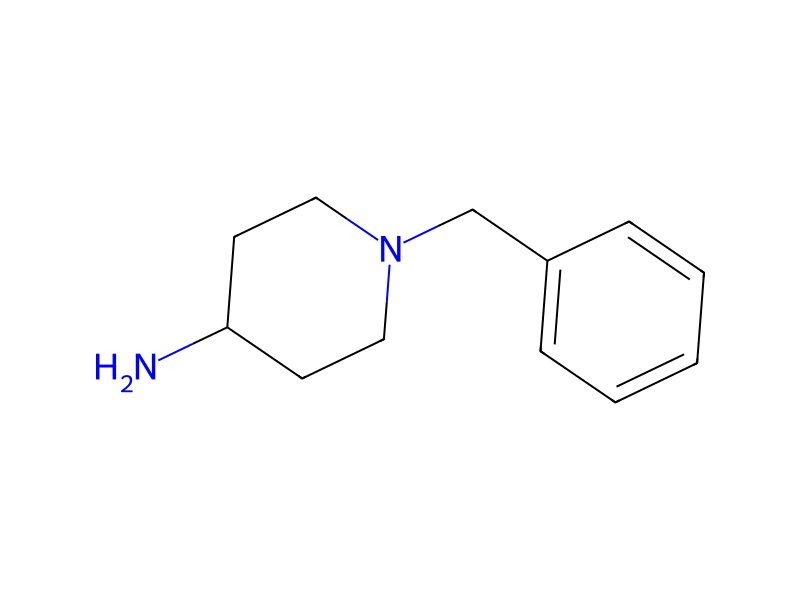
1-Benzyl-4-piperidylamine → N-(1-benzylpiperidin-4-yl)-5,7-dimethoxy-4-(4-methoxyphenyl)phthalazin-1-amine

HRID 29922
Notizen
Druckvorschau

Reaktionsgleichung

Reaktionsgleichung von HRID 29922
Cl[C:2]1[C:11]2[C:6](=[C:7]([O:14][CH3:15])[CH:8]=[C:9]([O:12][CH3:13])[CH:10]=2)[C:5]([C:16]2[CH:21]=[CH:20][C:19]([O:22][CH3:23])=[CH:18][CH:17]=2)=[N:4][N:3]=1.[NH2:24][CH:25]1[CH2:30][CH2:29][N:28]([CH2:31][C:32]2[CH:37]=[CH:36][CH:35]=[CH:34][CH:33]=2)[CH2:27][CH2:26]1.CC(C)([O-])C.[Na+].C(=O)([O-])O.[Na+]>C1(C)C=CC=CC=1.C1C=CC(/C=C/C(/C=C/C2C=CC=CC=2)=O)=CC=1.C1C=CC(/C=C/C(/C=C/C2C=CC=CC=2)=O)=CC=1.C1C=CC(/C=C/C(/C=C/C2C=CC=CC=2)=O)=CC=1.[Pd].[Pd].C1(P(C2C=CC=CC=2)C2C=CC3C(=CC=CC=3)C=2C2C3C(=CC=CC=3)C=CC=2P(C2C=CC=CC=2)C2C=CC=CC=2)C=CC=CC=1>[CH2:31]([N:28]1[CH2:29][CH2:30][CH:25]([NH:24][C:2]2[C:11]3[C:6](=[C:7]([O:14][CH3:15])[CH:8]=[C:9]([O:12][CH3:13])[CH:10]=3)[C:5]([C:16]3[CH:21]=[CH:20][C:19]([O:22][CH3:23])=[CH:18][CH:17]=3)=[N:4][N:3]=2)[CH2:26][CH2:27]1)[C:32]1[CH:33]=[CH:34][CH:35]=[CH:36][CH:37]=1
KomponentenReaktionsbedingungenVersuchsvorschriftAufarbeitungQuellen und NachweiseNotizen zur Reaktion

Komponenten

8

Edukt 4

HCID 4158521-Benzyl-4-piperidylamineHCID 516892Sodium BicarbonateHCID 23676156Sodium t-butoxideHCID 860752924-Chloro-6,8-dimethoxy-1-(4-methoxyphenyl)phthalazine

Produkt 1

HCID 69213501N-(1-benzylpiperidin-4-yl)-5,7-dimethoxy-4-(4-methoxyphenyl)phthalazin-1-amineAusbeute 46,4 %

Reagenzien, Katalysatoren, Lösungsmittel

3
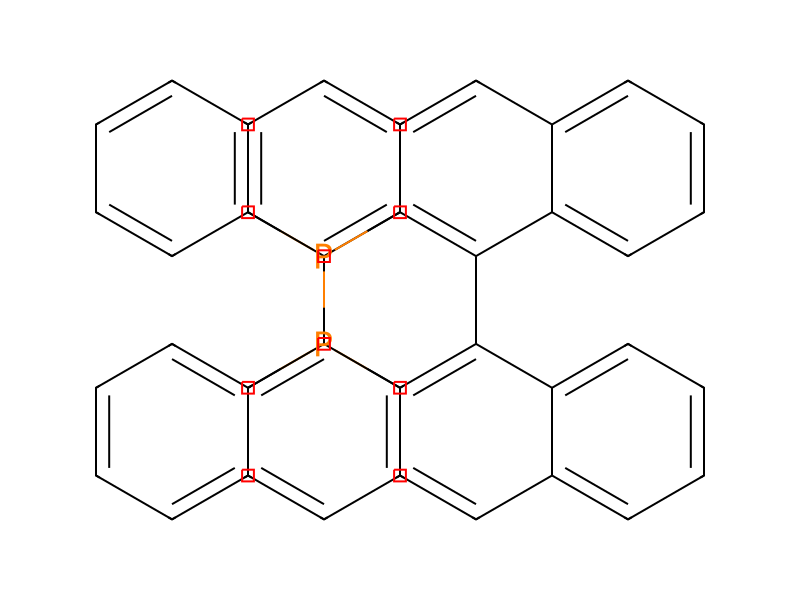
HCID 634876Binap, (A+-)-KatalysatorHCID 9811564Bis(dibenzylideneacetone)palladiumKatalysatorHCID 1140TolueneLösungsmittel

Reaktionsbedingungen

Temperatur
80 °C

Versuchsvorschrift

400 mg (1.2 mmol) of 4-chloro-6,8-dimethoxy-1-(4-methoxyphenyl)phthalazine dissolved in 5 mL of toluene, 276 mg (1.4 mmol) of 4-amino-1-benzylpiperidine, 163 mg (1.7 mmol) of sodium tert-butoxide, 6 mg (0.009 mmol) of BINAP (2,2′-bis(diphenylphosphino)-1,1′-binaphthyl) and 5.5 mg (0.006 mmol) of tris(dibenzylideneacetone)dipalladium are successively introduced into a tube under argon. The tube is hermetically sealed and the mixture is stirred at 80° C. for 24 hours. After cooling to room temperature, the reaction medium is hydrolysed with sodium hydrogen carbonate solution and then extracted with ethyl acetate. The organic phase is washed with water and with brine, dried over anhydrous sodium sulfate and then evaporated under reduced pressure. The residue obtained is purified by chromatography on a column of silica gel (solvent: 95/5 (v/v) dichloromethane/methanol). The oily product obtained forms a solid by trituration in ethyl ether. 270 mg of product are obtained in the form of a beige-coloured powder.

Aufarbeitung

  1. customThe tube is hermetically sealed
  2. temperatureAfter cooling to room temperature
  3. extractionextracted with ethyl acetate
  4. washThe organic phase is washed with water and with brine
  5. dry with materialdried over anhydrous sodium sulfate
  6. customevaporated under reduced pressure
  7. customThe residue obtained
  8. customis purified by chromatography on a column of silica gel (solvent: 95/5 (v/v) dichloromethane/methanol)
  9. customThe oily product obtained forms a solid by trituration in ethyl ether

Quellen und Nachweise

ORD-Eintrag
ord-eb6a4d70ae4842d6ab7efbb824bbfb94
Quelldatensatz
uspto-grants-2008_09
DOI
10.6084/m9.figshare.5104873.v1
Patentnummer
US07423030B2

Notizen zur Reaktion

Wird geladen…

Auf dieser SeiteKomponentenReaktionsbedingungenVersuchsvorschriftAufarbeitungQuellen und NachweiseNotizen zur Reaktion