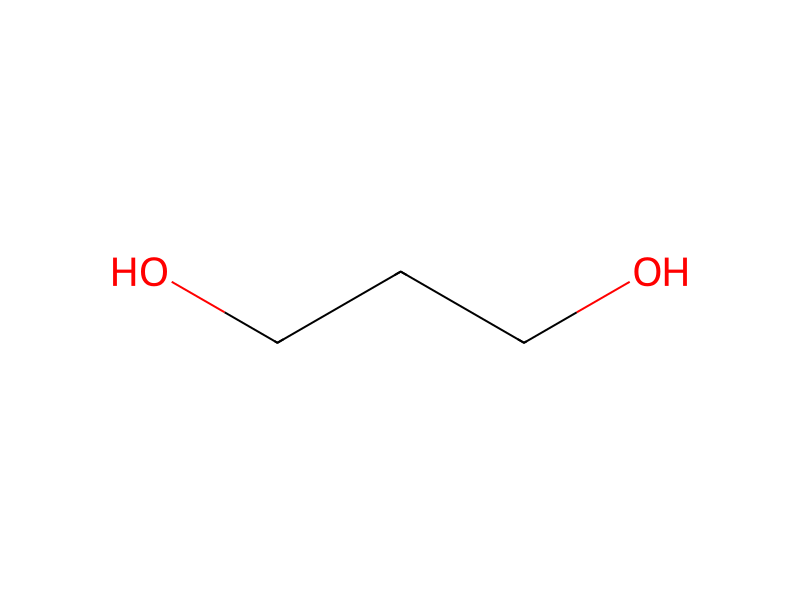
[H-].[Na+].[CH2:3]([OH:7])[CH2:4][CH2:5][OH:6].[Cl:8][C:9]1[CH:10]=[C:11]([CH:26]=[CH:27][C:28]=1[O:29][CH3:30])[CH2:12][NH:13][C:14]1[C:23]2[C:18](=[CH:19][CH:20]=[C:21]([Cl:24])[CH:22]=2)[C:17](Cl)=[N:16][N:15]=1>O>[Cl:24][C:21]1[CH:22]=[C:23]2[C:18](=[CH:19][CH:20]=1)[C:17]([O:6][CH2:5][CH2:4][CH2:3][OH:7])=[N:16][N:15]=[C:14]2[NH:13][CH2:12][C:11]1[CH:26]=[CH:27][C:28]([O:29][CH3:30])=[C:9]([Cl:8])[CH:10]=160% Sodium hydride (0.12 g, 3.0 mmol) was added to 8 ml of 1,3-propanediol. The obtained mixture was stirred at room temperature for one hour, followed by the addition of 1.0 g (2.7 mmol) of the compound prepared in Example 27. The obtained mixture was stirred at 150° C. for one hour, followed by the addition of water. The resulting mixture was extracted with ethyl acetate. The organic phase was washed with water and a saturated aqueous solution of common salt, dried over anhydrous magnesium sulfate and freed from the solvent by distillation. The residue was purified by silica gel column chromatography [solvent: dichloromethane/methanol (30:1)] and recrystallized from aqueous ethanol to give 0.58 g of the title compound as white needles.