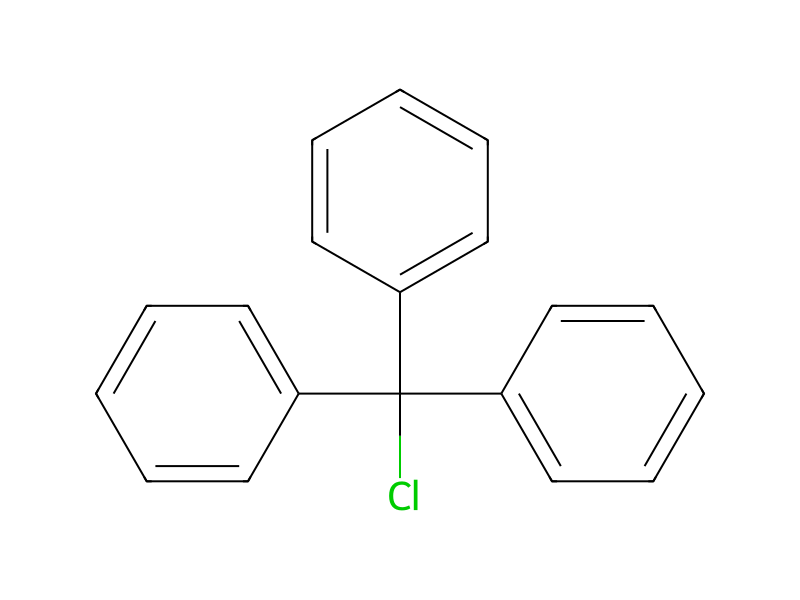
[C:1](Cl)([C:14]1[CH:19]=[CH:18][CH:17]=[CH:16][CH:15]=1)([C:8]1[CH:13]=[CH:12][CH:11]=[CH:10][CH:9]=1)[C:2]1[CH:7]=[CH:6][CH:5]=[CH:4][CH:3]=1.Cl.[CH3:22][O:23][C:24](=[O:29])[C@H:25]([CH2:27][OH:28])[NH2:26].C(N(CC)CC)C>C1COCC1>[CH3:22][O:23][C:24](=[O:29])[C@H:25]([CH2:27][OH:28])[NH:26][C:1]([C:14]1[CH:19]=[CH:18][CH:17]=[CH:16][CH:15]=1)([C:8]1[CH:13]=[CH:12][CH:11]=[CH:10][CH:9]=1)[C:2]1[CH:7]=[CH:6][CH:5]=[CH:4][CH:3]=1A solution of 10.75 g (38.56 mmol) of trityl chloride is added, at 0° C., to a solution of 6 g (38.56 mmol) of L-serine methyl ester hydrochloride and 7.8 g (77.12 mmol) of triethylamine in absolute THF and this solution is left to stir at 0° C. for 4 h and then at room temperature for 2 days. The solvent is removed in vacuo and the residue is partitioned between dichloromethane and a 10% aqueous solution of citric acid. The phases are separated and the organic phase is washed with water and dried over sodium sulfate. Following filtration, the solvent is removed in vacuo and the residue is chromatographed through silica gel using heptane/ethyl acetate=6/4. 8 g (58%) of (34.3) are obtained after concentrating the product fractions.