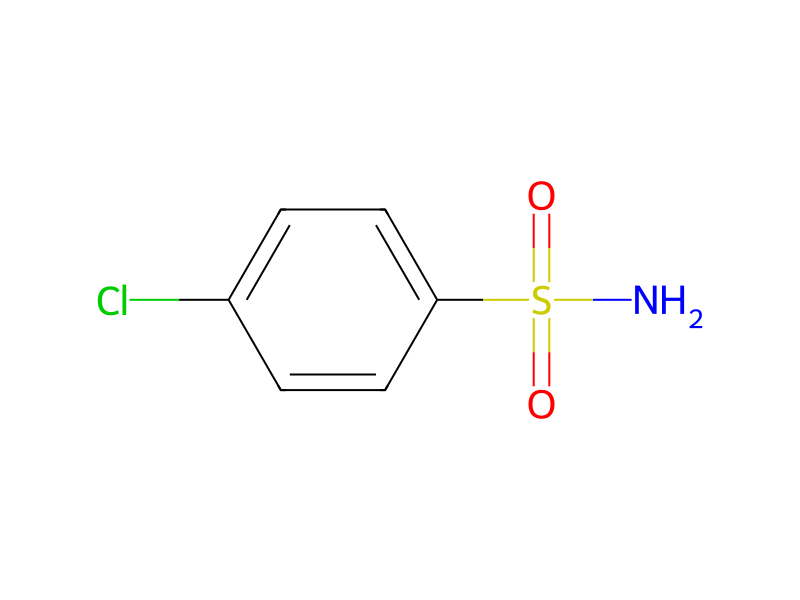
A 5-liter, 3-necked, round-bottomed flask was equipped with a mechanical stirrer and nitrogen inlet. dichloromethane (2 liters) was placed in the reaction flask and terephthalic acid mono-t-butyl ester (127.5 g), 4-dimethylaminopyridine (70.06 g), and 4-chlorobenzenesulfonamide (110.04 g) were added in that order using dichloromethane (400 ml) to wash down the solids. 1-(3-Dimethylaminopropyl)-3-ethylcarbodiimide hydrochloride (110.10 g) was added in portions over 10 min using dichloromethane (100 ml) to wash down the solid. After the reaction mixture was stirred overnight at room temperature, it was evaporated. The residue was partitioned between ethyl acetate and water. The organic solution was washed (20% (w/v) aqueous citric acid, saturated aqueous NaHCO3, brine), dried (Na2SO4), and evaporated to a white solid. After drying in a vacuum oven at 50° C., the ester (227 g, 100%) was obtained in a sufficiently pure state to be used directly for the next step; TLC, Rf =0.43, methanol:chloroform (15:85). (Further purification was possible by recrystallization from ethanol:water; mp above 300° C.).