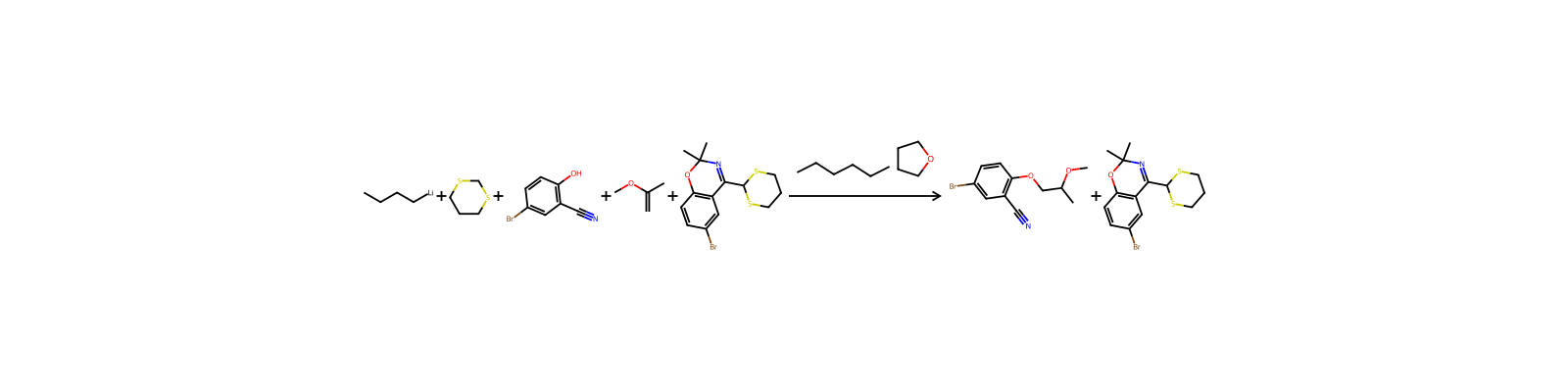
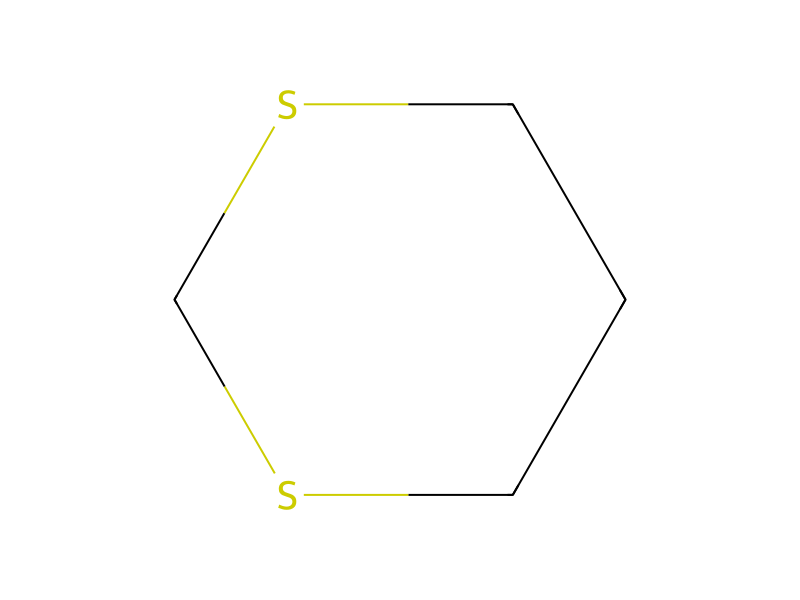
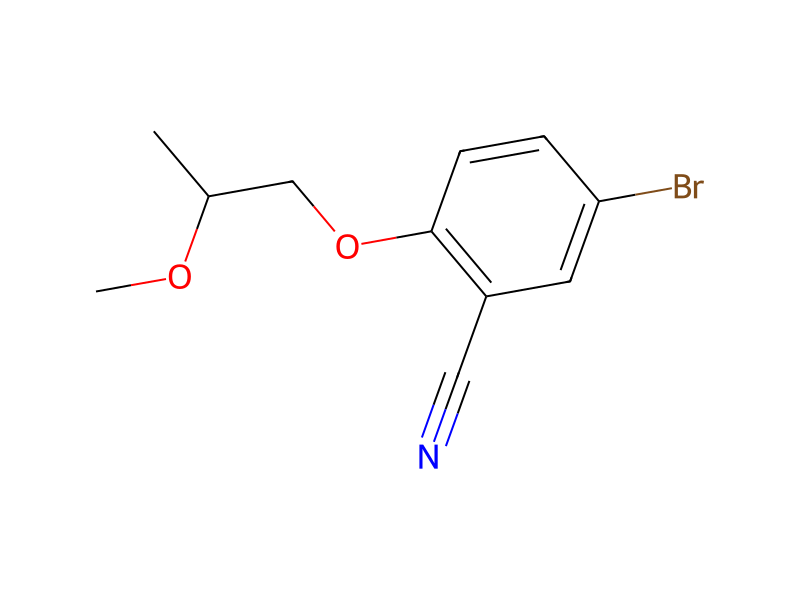
A solution (13.8 ml) of 1.6M n-butyllithium in hexane was added dropwise to a solution of 1,3-dithian (1.5 g) in anhydrous tetrahydrofuran (35 ml) at -78° C. under an argon atmosphere over 10 minutes. After stirring for 30 minutes, a solution of 5-bromo-2-(2-methoxy-2-methylethoxy)benzonitrile, which was prepared from 4-bromo-2-cyanophenol (m.p. 148°-150° C., 2.48 g) and 2-methoxypropene (1.1 g) according to the same manner as described in Example 29, in anhydrous tetrahydrofuran (5 ml) was added to the mixture. The mixture was treated in the same manner as that in Example 29 to obtain 6-bromo-2,2-dimethyl-4-(1,3-dithian-2-yl)-2H-1,3-benzoxazine (0.90 g) (Compound 105).